

Knowledge Products
The GPSC hosts a digital library featuring practical tools, reports, and case studies. Explore curated resources across thematic areas, filtering by topic or region to find the insights required to advance urban sustainability.
Report
Climate Change Infrastructure Project Screening Framework (for Mitigation and Adaptation)
This tool helps catalyzing the next generation of investments in cities for climate-smart, greener, more resilient, and inclusive urbanization.Tool
Municipal PPP Framework: Project Summaries part 2
The report presents national and subnational PPP case studies, highlighting frameworks, institutions, and processes that support successful delivery.
Municipal PPP Framework: Project Summaries part 1
The report compiles city‑level PPP case studies, highlighting design, financing, risk, and advisory lessons to guide infrastructure delivery.
Women, Business and the Law 2021
The report measures legal barriers to women’s economic opportunity worldwide, presenting eight indicators and encouraging reforms.
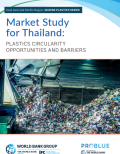
Market Study for Thailand: Plastics Circularity Opportunities and Barriers
The report assesses Thailand’s plastics value chain, identifying opportunities and barriers for shifting from linear waste models to circularity.
Inclusive Resilience : Inclusion Matters for Resilience in South Asia
South Asia faces rising climate hazards that disproportionately harm marginalized groups requiring inclusive disaster risk management.
Influence of COVID-19 on China’s Urban Planning and Design Regulations
This note explains how the pandemic is reshaping regulations in China and affecting urban planning and city management.
Health-Oriented Micro-Generation in Shanghai
Integrating health considerations into planning can reduce disease risks at population scale by improving physical and mental health.
Participatory Community Regeneration Powered by Disruptive Technologies
Disruptive technologies are bringing new opportunities to urban and community planning.
Best Practices and Lessons Learned on the Pathways to Sustainability: Urban Park Rangers
Urban conservation areas reduce environmental impacts, and training park rangers helps cities place nature at the center of urban life.