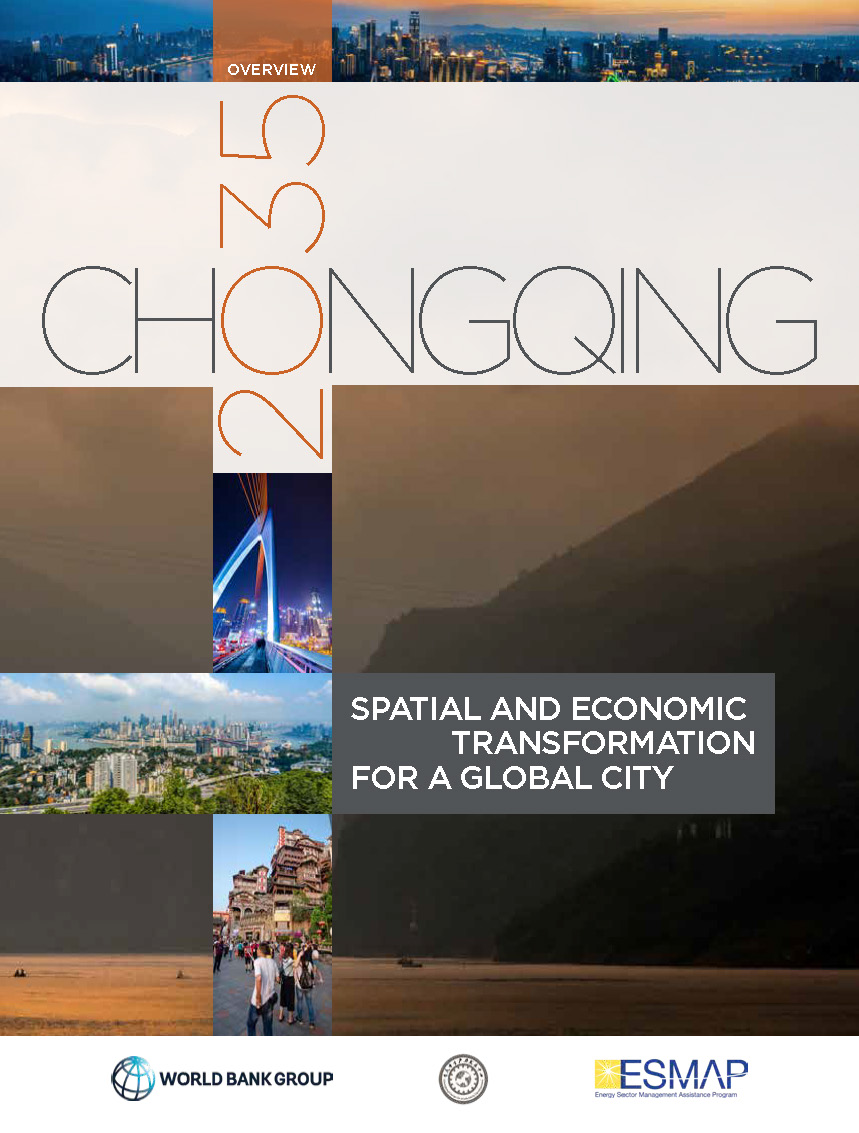
Each part of the Chongqing 2035 report is downloadable below.
- Overview Report: Spatial and Economic Transformation for a Global City
- Supporting Report 1: Spatial Transformation Strategy Increasing Efficiency and Livability by Promoting Compact and Human-Centered Development
- Supporting Report 2: A Regional Strategy to Increase Connectivity and Economic Integration
- Supporting Report 3: An Innovation Strategy to Climb Up the Value Chain and Create the Conditions for a Skilled Labor Force
- Supporting Report 4: A Green and Low-Carbon Growth Strategy to Decouple Economic Growth from Resource Use
- Technical Report: Urban Growth Scenarios
All of the documents above go together constituting the Chonqing 2035 Report. GPSC supported the development of the technical report, which compares the modeled outcomes of two different development paths for the Chonqing city, as represented by land use scenarios for projected growth of 5.8 million new urban residents and 4 million new jobs.
Please find below the vlog with Xueman Wang, Senior Urban Specialist, World Bank and Peter Calthorpe, Founding Father of Transit-oriented Development, Calthorpe Associates discussing the Chongqing 2035 report.