

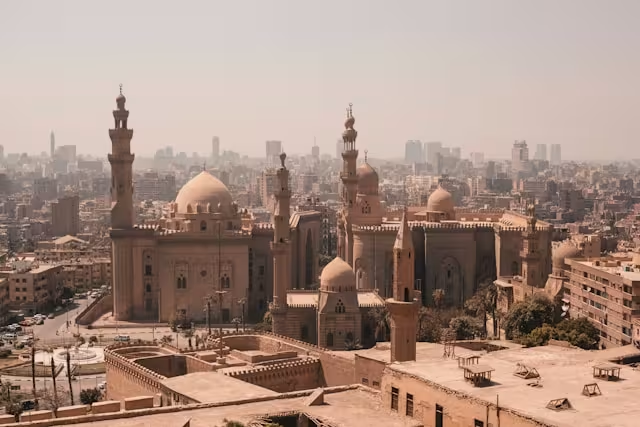
Photo by Omar Elsharawy / Unsplash
Cairo, Egypt’s capital and largest metropolitan area plays a leading role in advancing sustainable urban development in the Middle East and North Africa. Home to over 20 million people, Cairo faces challenges related to congestion, air pollution, and rapid urban expansion across the Greater Cairo Region. The city is implementing ambitious climate-smart initiatives, including the Cairo 2050 Vision, which promotes compact, transit-oriented development, green public spaces, and improved waste management. Supported by national strategies and World Bank engagement, Cairo is investing in low-emission transport systems—such as the electric monorail and new metro lines—and expanding renewable energy use in public infrastructure. These measures aim to enhance livability, reduce carbon emissions, and build resilience in one of the region’s fastest-growing megacities.