


GEF-6 (China Sustainable Cities Integrated Approach Pilot)
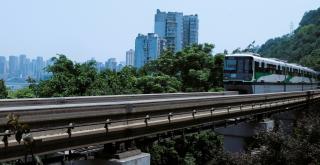
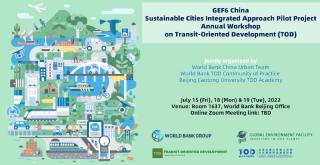
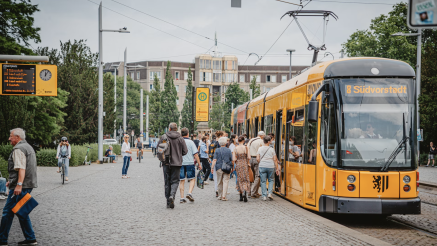
Beijing participated in the GEF-6 China Sustainable Cities Integrated Approach Pilot (SCIAP), led by the World Bank, to advance transit-oriented development (TOD) and low-carbon mobility. As a key city in the Jing-Jin-Ji (Beijing–Tianjin–Hebei) urban region, Beijing integrated land use and transport planning across metro, bus, and BRT systems to improve connectivity and reduce emissions. The program supported the development of a national TOD toolkit and provided technical assistance to align the city’s urban rail expansion with sustainable spatial growth. Beijing’s work under GEF-6 has served as a reference for integrating high-capacity transit systems with compact development in rapidly urbanizing regions of China.
GEF-8 (Sustainable Cities Integrated Program)
Under the GEF-8 Sustainable Cities Integrated Program (SCIP), Beijing continues its leadership through the Jing-Jin-Ji framework, connecting knowledge and investment via the GPSC Global Knowledge Platform. The city is scaling green buildings, clean energy, and ecological corridors through integrated land-use planning and nature-based solutions. Decarbonized infrastructure and circular-economy approaches are embedded into planning and budgeting cycles, enabling Beijing to mobilize public-private investment and accelerate progress toward its carbon-neutrality targets by 2060.