

Malaysia Launches GEF-8 Sustainable Cities Project to Advance Urban Decarbonization
23 SEPTEMBER 2026 /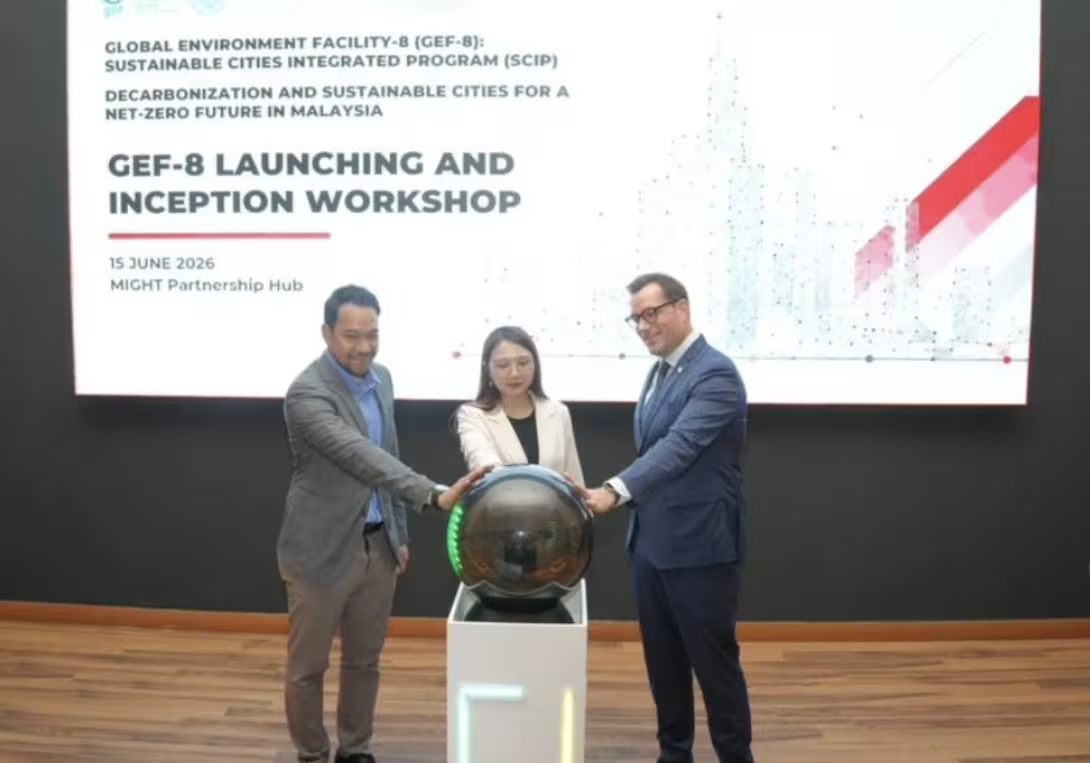
Malaysia has officially launched its project under the GEF-8 Sustainable Cities Integrated Program (SCIP), marking an important step toward accelerating urban decarbonization and advancing more resilient, inclusive, and sustainable cities in Selangor.
The project, Decarbonisation and Sustainable Cities for a Net-Zero Future in Malaysia, was launched in June 2026 by the Malaysian Industry-Government Group for High Technology (MIGHT), in collaboration with the United Nations Industrial Development Organization (UNIDO). The initiative is funded by the Global Environment Facility (GEF), with UNIDO serving as the GEF Implementing Agency and MIGHT as the national Executing Agency.
Building on Malaysia’s previous engagement with the GEF Sustainable Cities Program, the new project will use cities in Selangor as strategic entry points for demonstrating integrated approaches to urban decarbonization. It will bring together policy reform, innovative technologies, financing mechanisms, and capacity building to address climate change, biodiversity loss, and land degradation while supporting Malaysia’s transition toward a net-zero future.
The project will help participating cities strengthen integrated decarbonization policies and planning, develop pipelines of sustainable urban investments, and identify innovative financing approaches. Demonstration activities will explore areas including energy-efficient buildings, sustainable transport, renewable energy, green infrastructure, and ecosystem restoration. The project will also strengthen municipal capacity, knowledge exchange, and partnerships with the private sector to support wider replication.
The launch brought together representatives from government, local authorities, industry, and development partners, reinforcing the importance of collaboration across institutions and levels of government to translate national climate ambitions into practical city-level action.
Malaysia is one of the countries participating in the GEF-8 Sustainable Cities Integrated Program, which supports integrated approaches to nature-positive, climate-resilient, and low-carbon urban development. The Global Platform for Sustainable Cities (GPSC), led by the World Bank Group, serves as the program’s global knowledge and coordination platform, connecting participating countries and cities with GEF Agencies and global partners to exchange knowledge, strengthen capacity, and accelerate implementation.
The launch marks the beginning of a new phase for Malaysia’s participation in the Sustainable Cities Program, building on previous experience while creating new opportunities to demonstrate approaches that can be replicated across Selangor and beyond.
Learn more about the GEF-8 Sustainable Cities project in Malaysia on the GPSC country page.
Photo Credit: Malaysian Industry-Government Group for High Technology (MIGHT)