

Nature-Based Solutions That Last: Recife's GEF-6 Filtering Garden Continues to Improve Water Quality
09 JULY 2026 /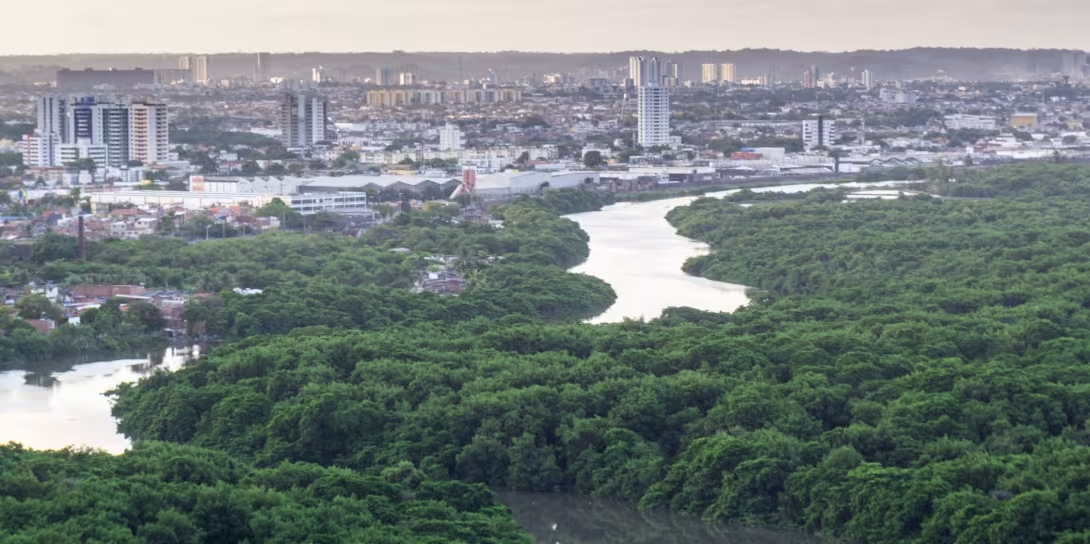
More than two years after the completion of the GEF-6 Sustainable Cities Integrated Approach Pilot (SC-IAP) project in Brazil, one of its flagship nature-based solutions continues to demonstrate measurable environmental benefits. A new technical assessment of the filtering garden at Caiara Park in Recife confirms that the system remains highly effective in improving water quality, while also illustrating the importance of long-term maintenance, community engagement, and local ownership.
Developed under the GEF-6 Sustainable Cities project, the Caiara Park filtering garden was designed as a nature-based solution to improve the quality of polluted urban water before it is discharged into the Cavouco Stream. Rather than relying on conventional treatment infrastructure, the system uses vegetation, natural filtration, and biological processes to remove pollutants while creating new green public space and enhancing urban biodiversity.
The newly released technical report draws on 14 monitoring campaigns carried out between May 2024 and April 2026, providing one of the most comprehensive post-project assessments of a nature-based urban water treatment system supported through the GEF Cities Program. The results demonstrate that the filtering garden continues to perform strongly after project completion, achieving median removal rates of 69% for biochemical oxygen demand (BOD), 73% for chemical oxygen demand (COD), and 81% for total nitrogen. At the sand filter outlet, pollutant removal reached as high as 97% during some monitoring campaigns. The treated water also consistently complied with Brazilian regulatory standards for several key parameters, including ammonia, nitrate, turbidity, dissolved solids, pH, and temperature.
From project to long-term stewardship
One of the most encouraging findings goes beyond the technical performance of the system. Since the project's completion in 2024, the Municipality of Recife has assumed responsibility for operating and maintaining the filtering garden, assigning dedicated public servants to oversee its continued functioning.
This transition from project implementation to municipal ownership is critical for ensuring that nature-based solutions continue to deliver environmental benefits well beyond the life of donor-funded investments. It also demonstrates how pilot projects can become permanent components of a city's green infrastructure network.
Learning through long-term monitoring
The assessment also illustrates why continued monitoring matters. While the filtering garden continues to perform well overall, the report identifies several operational challenges that can further improve its effectiveness.
One notable example is the introduction of fish by local residents into one of the treatment lagoons. Although well-intentioned, this altered the treatment process by increasing organic matter and disturbing settled sediments, reducing the water purification performance at the final outlet. The report recommends removing the fish from the treatment lagoon or separating the lagoon from the treatment system, while strengthening community awareness of its technical function.
These findings highlight an important aspect of nature-based solutions. Because they are living systems integrated into public spaces, they require not only technical maintenance but also ongoing community engagement and adaptive management.
A model for replication
Beyond Recife, the filtering garden continues to influence wider urban practice in Brazil. The experience has become a valuable reference for cities exploring nature-based approaches to urban water management and has helped inform discussions on future green infrastructure initiatives at both municipal and national levels. By documenting long-term environmental performance, the technical assessment provides robust evidence that nature-based solutions can continue delivering measurable benefits long after project implementation has ended.
As cities seek cost-effective approaches to improve water quality, increase climate resilience, restore biodiversity, and create healthier public spaces, Recife's experience demonstrates the value of investing in green infrastructure that works with nature rather than against it.
Looking ahead
The GEF-6 Sustainable Cities Integrated Approach Pilot showed that nature-based solutions can deliver multiple environmental, social, and urban development benefits when integrated into city planning. Recife's filtering garden demonstrates that these benefits do not end when a project closes.
Continued monitoring, strong municipal ownership, and adaptive management are helping ensure that this investment remains an active piece of urban infrastructure, generating cleaner water, supporting biodiversity, and providing valuable lessons for future sustainable cities initiatives in Brazil and beyond.