

Malaysia
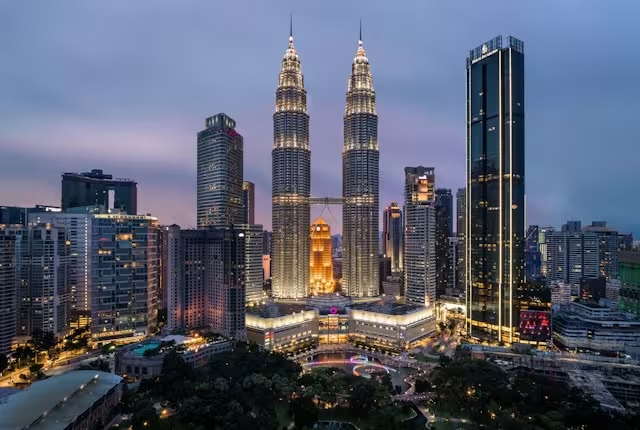
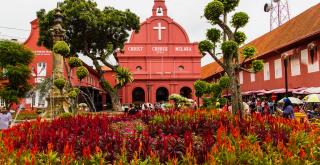
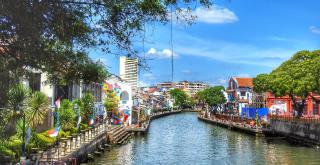
Photo by Esmonde Yong / Usplash
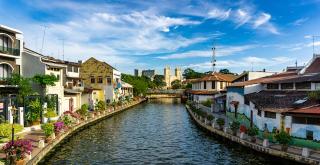
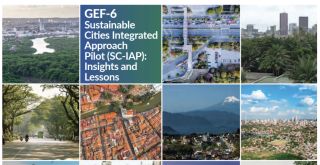
Malaysia has been a committed partner in the Global Environment Facility’s Sustainable Cities Program, contributing valuable lessons across both GEF-6 and GEF-8 SCIP. Under GEF-6, Malaysia’s work in Melaka became one of the program’s flagship examples—demonstrating how evidence-based planning, geospatial tools, and integrated policy frameworks can guide a state toward a low-carbon, climate-resilient future. Melaka’s sustainability diagnostics, green technology ambitions, and urban policy reforms provided a benchmark for other cities in the GPSC network, showcasing how strategic planning and targeted investments can drive transformative outcomes.
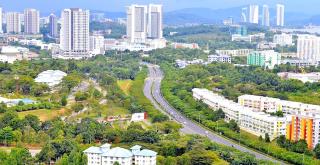
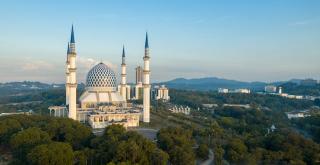
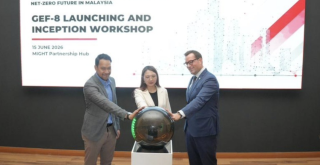
Building on this foundation, Malaysia continues its commitment under GEF-8 SCIP, where cities such as Cyberjaya, Klang, and Shah Alam are advancing decarbonization, green infrastructure, and circular-economy approaches aligned with national climate goals. Malaysia’s multisector experience—from clean energy transitions to nature-based urban solutions—continues to inspire the global GEF cities community and strengthens the shared vision of more resilient, inclusive, and sustainable urban pathways.
UNIDO serves as the Implementing Agency. The Executing Agency is the Malaysian Industry-Government Group for High Technology (MIGHT).
The project will be implemented in three pilot cities in Selangor (Cyberjaya, Shah Alam, and Klang), addressing systemic challenges in urban development, including fragmented planning, inadequate data for decision-making, and insufficient financial and institutional capacities. The project will adopt a holistic, integrated approach that includes policy reforms, capacity building, and technology demonstrations to promote sustainability across urban sectors. Key components include supporting policy development for decarbonization, promoting innovative financing mechanisms for low-carbon urban development, and investing in nature-based solutions. The project will also focus on strengthening local governance and fostering public-private partnerships to drive sustainable urban investments. These efforts will be scaled up to other cities in Selangor and beyond, with the potential for broader national and regional impact.
Component 1 – Integrated Urban Decarbonization Policy and Institutional Reform
- Development of city-level decarbonization action plans integrating climate mitigation, biodiversity, and land degradation objectives aligned with national frameworks
- Strengthening green and inclusive public procurement systems, including development of “how-to” manuals and institutional capacity-building
- Integration of gender-responsive policy inputs into municipal climate and sustainability planning frameworks
- Policy dissemination and stakeholder engagement workshops to institutionalize decarbonization measures across municipalities
- Scaling commitments through alignment of municipal plans with national funding mechanisms and NDC targets
Component 2 – Urban Sustainable Finance and Investment Pipeline Development
- Mapping and prioritization of investment areas for climate mitigation, NbS, and biodiversity restoration
- Development of innovative business models and financing structures, including PPP frameworks and blended finance mechanisms
- Preparation of investment-ready project concepts with standardized documentation packages
- Institutionalization of gender-responsive financing criteria within municipal investment planning
- Facilitation of multi-stakeholder financing mechanisms to scale sustainable urban solutions nationally
Component 3 – Demonstration Projects and Scaling of Low-Carbon Urban Solutions
- Transparent selection and scoring framework for demonstration project identification
- Technical, environmental, and commercial feasibility assessments of pilot projects
- Implementation of demonstration investments in EV charging infrastructure and energy efficiency/renewable energy in buildings
- Urban ecosystem restoration and sustainable land management interventions (up to 500 ha restoration)
- Replication and scaling mechanisms to extend successful pilots to additional municipalities
- Mobilization of public and private co-financing for low-carbon urban infrastructure investments
Component 4 – Knowledge Management, Digital Tools, and Capacity Building
- Participation in the Global Platform for Sustainable Cities (GPSC) and structured peer-learning exchanges
- Training programs for local authorities on green public procurement and integrated decarbonization approaches
- Development of web-based training platform and digital knowledge resource hub
- Documentation of case studies, lessons learned, and dissemination through webinars and knowledge products
- Strategic partnerships with technology providers for sustainable urban innovation deployment
Component 5 – Monitoring, Evaluation, and Impact Tracking
- Implementation of integrated M&E system aligned with GEF Core Indicators and SCIP metrics
- Annual progress reporting, PIR submissions, Mid-Term Review (MTR), and Terminal Evaluation (TE)
- Tracking of GHG mitigation, land restoration, and beneficiary impact indicators (gender-disaggregated)
- Enhanced capacity of local governments in urban planning and governance to integrate climate change, biodiversity, and sustainable development goals into their policies and strategies.
- Increased adoption of low-carbon technologies, nature-based solutions, and circular economy practices across urban sectors.
- Development of investment-ready projects and access to innovative financing mechanisms, including public-private partnerships and green finance, to support sustainable urban development.
- Demonstration of successful interventions in the pilot cities, including energy-efficient buildings, sustainable transport systems, and green infrastructure, serving as models for other cities in Malaysia and the region.
- Strengthened stakeholder engagement and gender integration, ensuring inclusive and participatory planning processes.
- Knowledge sharing and capacity building at the national, regional, and global levels, contributing to a broader movement towards net-zero, nature-positive urban development.
Total GEF Grant (USD)
7,199,671
Total Co-financing (USD)
15,230,000
World Bank Country Profile (Data Portal)
For broader socioeconomic and environmental context, consult the World Bank Country Data Profile. It provides up-to-date indicators on economic performance, social development, climate and environmental metrics, as well as an overview of World Bank operations and financing in the country. Access the country profile here.
GEF Country Profile
For information on Global Environment Facility engagement, see the GEF Country Profile. It presents an overview of GEF-funded projects, thematic areas of intervention, implementing partners, and country resource allocations, offering insight into environmental investment priorities and ongoing initiatives. Access the country profile here.
WOFI Country Profile
For additional insights on subnational public finance, see the OECD Subnational Government Finance Observatory (WOFI) Country Profile. It provides internationally comparable data on revenues, expenditures, investment, debt, and fiscal arrangements across levels of government, offering a useful reference on fiscal capacity and decentralization. Access the country profile here.