A greener tomorrow: Water management in urban redevelopment: Dortmund, Germany
September 30, 2016
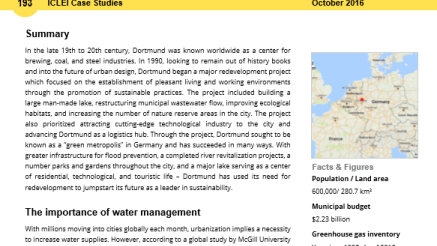
Dortmund has transformed from a major industrial city into the “green metropolis” of Germany’s Westphalia region. Following World War II and the closure of major coal mines and steel plants, the city undertook a major sustainable redevelopment project which led to marked improvements to municipal water management and sustainable design. The results of this case study show that cities caught in antiquated infrastructure or modes of living may find success in adopting more sustainable practices. The case of Dortmund’s redevelopment suggests that smaller scale projects such as increasing the number of parks and gardens or maintaining and restoring natural pathways for civilian use, can build resilience and improve quality of life for its inhabitants. By focusing on improving their water management, cities can work towards climate change mitigation, increased water supplies, and greater city-wide resiliency.