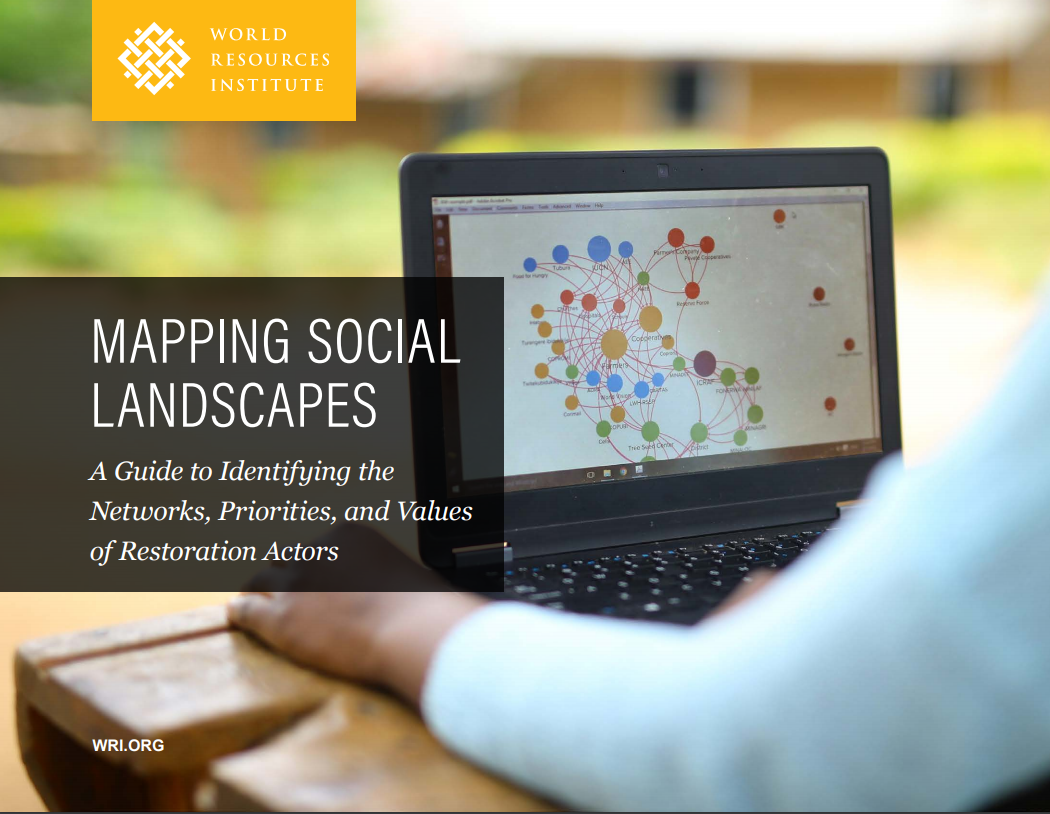


Mapping Social Landscapes: A Guide to Identifying the Networks, Priorities, and Values of Restoration Actors

August 01, 2018

The guidebook takes a new approach to environmental governance by focusing on identifying the social capital of actors within the landscapes. It centers on two main approaches: 1) mapping actors’ resource flows and 2) mapping actors’ priorities and values. Co-written by WRI international offices, this methodology has been tested in Brazil, India, Indonesia, Kenya, Mexico, and Rwanda. The guidebook focuses primarily on restoration, but the same methodologies can be adapted to broader analysis of natural resource governance. By using this guidebook, environmental practitioners can be more efficient with resources, collaboration, and outreach, and better anticipate potential conflicts and bottlenecks.

Related content
View all

Planning

Ending Global Sprawl: Urban Standards for Sustainable and Resilient Development

The health and wellbeing of humankind will depend on the kind of cities we build in the next two generations. They will provide the scaffolding for our social, economic and environmental future. In
Knowledge Product

Learn more

Planning

Melaka: Pathway to Urban Sustainability

Melaka State in Malaysia has strong sustainability aspirations and is an important member of the Global Platform for Sustainable Cities (GPSC). To inform the next update to Melaka’s State Structure
Knowledge Product

Learn more

Planning

Flooding in East Africa: The impacts on and implications for cities in East Africa, with a case study of Dar es Salaam

This report is aimed primarily at policymakers in emerging megacities, where the population is set to reach more than 3 million by 2050, but also at practitioners and other interested parties. The
Knowledge Product

Learn more