

Health, Safety and Dignity of Sanitation Workers: An Initial Assessment
31 OCTOBER 2019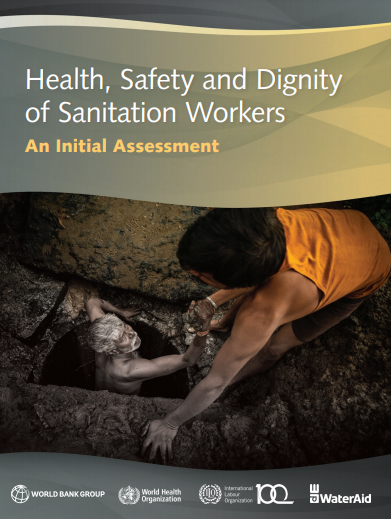
The global sanitation workforce bridges the gap between sanitation infrastructure and the provision of sanitation services. Sanitation workers provide an essential public service but often at the cost of their dignity, safety, health, and living conditions. They are some of the most vulnerable workers. They are far too often invisible, unquantified, and ostracized, and many of the challenges they face stem from this fundamental lack of acknowledgment. Sanitation workers are exposed to serious occupational and environmental health hazards risking illness, injury, and death.
This report presents the findings of a study that examined nine case studies of sanitation workers in low- and middle-income countries, predominantly focusing on emptying pits and tanks, providing transportation of fecal sludge, and performing sewer maintenance. It is an initial analysis into a growing body of work on sanitation workers, but already the findings highlight several action areas to ensure that efforts in reaching Sustainable Development Goals (SDG) 6.2 and 6.3 do not compromise the dignity, health, and rights of the workforce. Collecting data from literature and key informant interviews, the nine cases provide an overview of the key challenges sanitation workers face. The report also addresses good practices and suggests areas for action.