

Strengthening Municipal Finance and Solid Waste Management Services with Results-based Financing Approaches: Experiences from South Asia
30 APRIL 2020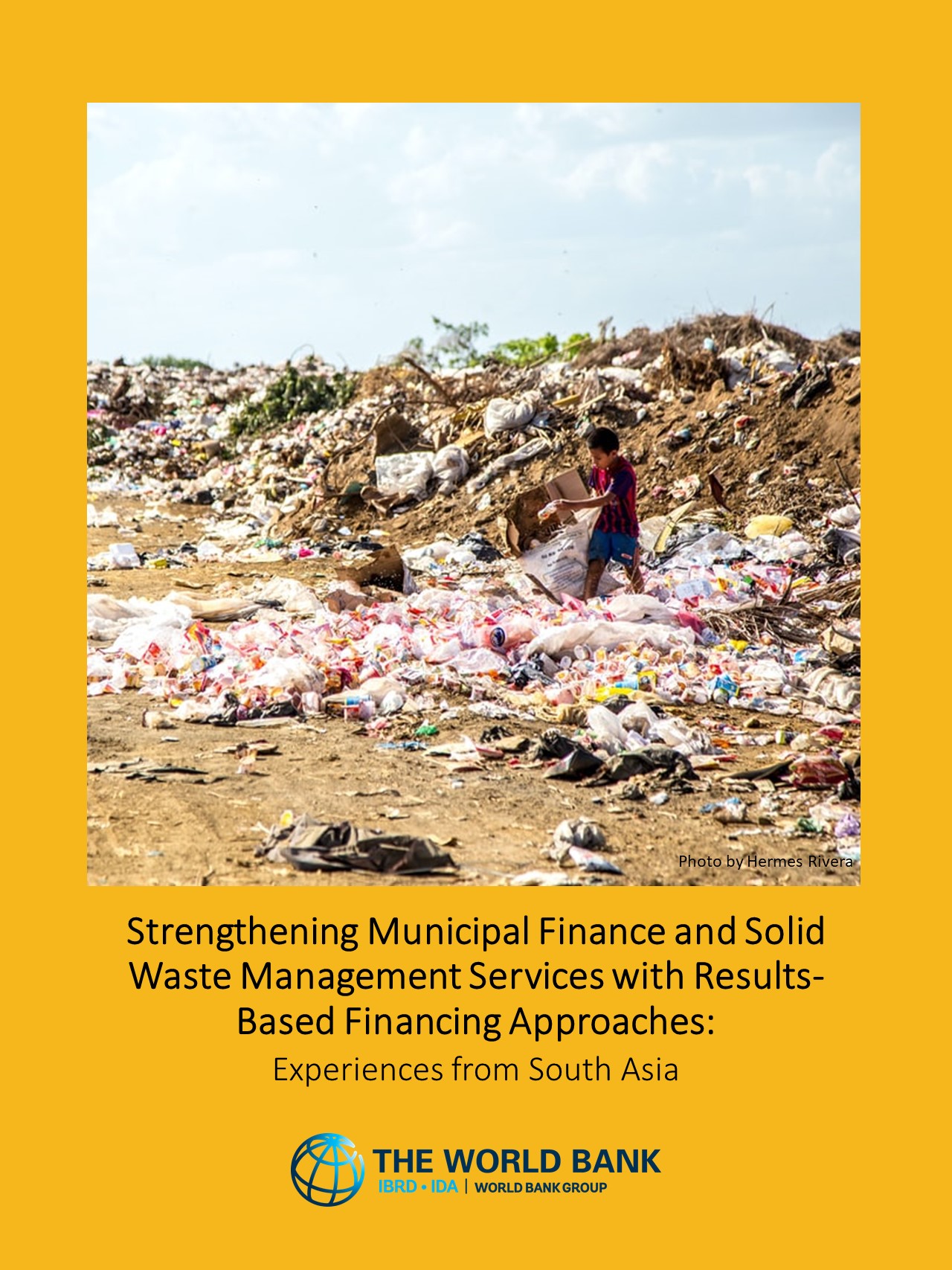
From the near twenty million metropolitan city of Karachi, in Pakistan to the 400,000 person city of Pokhara, in Nepal, mayors and decisions makers are struggling to raise financing for capital investments in their cities that could deliver improved services to their communities, with the key priority being the solid waste management (SWM) services. The municipal finance (MuFi) challenge is common among metropolitan or secondary cities in less developed countries and is associated with their limited capacity to address a range of issues. Solid waste management is a primary sector that suffers from ineffective municipal financing. Municipal financing is the backbone of waste management.
Results-based approaches can benefit the SWM sector by ensuring that funds are used efficiently and transparently to produce verified results. Result-based financing (RBF) is an umbrella term for financing models that disburse funds only after measurable, pre-agreed results have been achieved and verified. As cities and municipalities have great variation in their practices, problems and capacities, SWM projects should focus on a set of results tailored to context-specific needs, with service providers and municipalities deciding which service-delivery models can best achieve results locally. While the design of RBF schemes should always be informed by the local institutional and financial context and could be structured in a diverse way to meet the objectives of each operation, there are some key lessons learned from global experiences regarding the general design of RBF schemes and municipal financing. This report focuses on the features of RBF schemes in Pakistan and Nepal.