

Resilient Cultural Heritage: Learning from the Japanese Experience

June 15, 2020
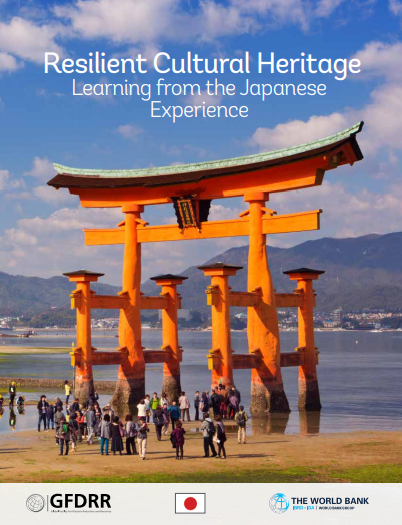
Japan’s cultural heritage (CH) is among the richest in the world, but the country is faced with some of the most difficult challenges in its exposure to hazards. With earthquakes, volcanic eruptions, tsunamis, typhoons, floods, landslides, and fire, Japan is ranked second, behind the Philippines, for exposure to natural hazards, according to the INFORM Global Risk Index 2019. This has forced the country to develop a culture of continuous improvement in the face of hazard events—a quality that is particularly notable in its management of its CH. 
 
This report reflects good practices and lessons learned from Japan to support international practitioners in the fields of disaster risk management (DRM), CH, and public policy, who are seeking to enhance the disaster resilience of CH and communities in their countries.
Related content
View all

Culture

Orange is the new colour of city competitiveness: The role of local governments in promoting cultural and creative industries

Cities have the power to stimulate and harness culture, creativity and innovation for local development. Culture and creativity are invaluable assets with untapped potential to deliver spatial
Knowledge Product

Learn more

Culture

Culture in City Reconstruction and Recovery

As urban growth and development continue at a breathtaking pace across the world, cities are increasingly bearing the brunt of conflicts, crises and disasters, which themselves are growing in number
Knowledge Product

Learn more

Culture

Uzbekistan: Resilient Cultural Heritage and Sustainable Tourism Development

In Uzbekistan, authorities instituted strong health and social distancing measures in March to contain local transmission of COVID-19, with national and international flights being cancelled. This has
Knowledge Product

Learn more