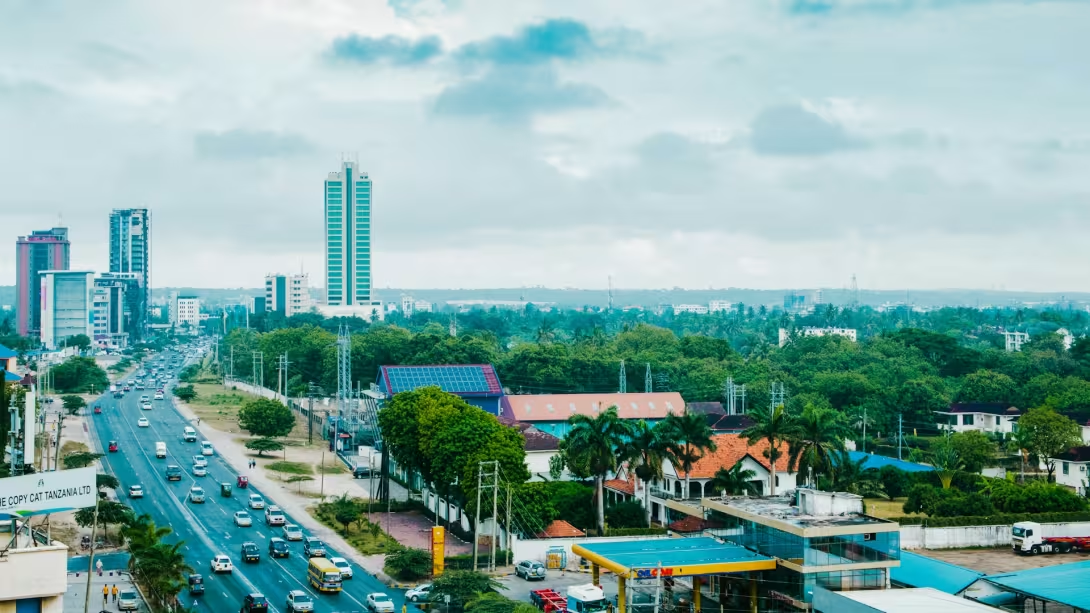
Dar es Salaam is one of Africa’s fastest-growing cities, with 1,000 new residents arriving each day. To meet the rising demand for efficient and accessible public transport, the city has implemented a Bus Rapid Transit (BRT) system funded by the World Bank. Since its launch in 2016, the BRT has provided an affordable, fast, and reliable solution for daily commuters. By utilizing dedicated bus lanes, off-board fare collection, and frequent service, it has reduced travel times from three hours to just 45 minutes.
The BRT’s first phase, which includes 29 stations across 20.1 kilometers, has seen immediate success, encouraging further expansion. Future plans include over 140 kilometers of additional BRT corridors to serve the growing population. Once complete, the network is expected to accommodate over two million passengers per day, connecting people to jobs, services, and opportunities across the city. This expansion is critical for supporting Dar es Salaam’s sustainable urban growth.
In addition to improving transit efficiency, the BRT system supports green development goals by reducing car usage and emissions. Plans to introduce cleaner buses and digital fare systems further align with the city’s commitment to sustainability. As the network grows, the BRT will continue to play a key role in enhancing urban mobility, safety, and environmental resilience, while contributing to the broader sustainable development of Dar es Salaam.