

Protecting health in dry cities: considerations for policy makers

19 September 2025 /
Blog

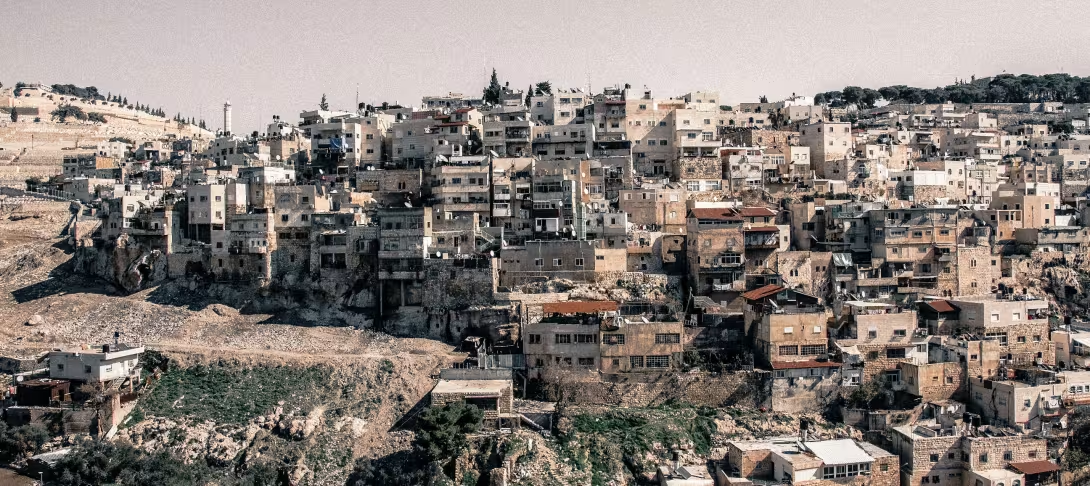
Photo by Timon Studler on Unsplash
Increasing health and wellbeing in cities that experience water scarcity presents challenges, but can be done, say Howard Frumkin and colleagues.
Water has always been essential for cities to survive and thrive. The earliest cities, from 4000 BC, were founded near water sources. Conversely, water scarcity might have contributed to the demise of ancient cities such as Tikal in present day Guatemala and Angkor in present day Cambodia. Water deprivation was also used as a weapon in ancient times; when Sennacherib of Assyria ransacked Babylon in 689 BC, he destroyed the city’s water supply.
 
Dry cities present complex challenges in a dynamic world. The supply of water in many cities will increasingly fall short of demand, with diverse and potentially severe effects on health. In a world of pervasive inequalities, water scarcity is likely to hit the most vulnerable hardest. The challenge of achieving health in dry cities is intensified in the setting of resource scarcity, state and societal fragility, and weak institutions.

DOWNLOADS

Latest Knowledge resources
View all

Climate Change Infrastructure Project Screening Framework (for Mitigation and Adaptation)

The Climate Change Infrastructure Project Screening Framework (for Mitigation and Adaptation) is a tool to help catalyze the next generation of investments in cities for climate-smart, greener, more resilient, and inclusive urbanization. It has been developed to assess proposed infrastructure investments for World Bank Group (WGB) support and activate increased city ambition to tackle issues of social, environmental, and economic sustainability. The Framework was developed under the Green and Future Cities (GFC) Project, designed to operationalize Türkiye’s National Development Plan

Tool

Nature

Compendium for City Good Practice Series: How Paris Is Leveraging Nature For Climate Resilience

This report, as part of the Compendium for City Good Practice series, highlights Paris's innovative approach to climate resilience through the strategic integration of nature into urban environments. It offers a comprehensive overview of Paris's strategy on urban nature, showcasing how the city is integrating biodiversity into planning, leveraging green spaces, biodiversity corridors, and sustainable landscaping to mitigate the impacts of climate change. The report serves as a valuable resource for cities worldwide seeking to emulate Paris's successful model of

Report