

Webinar
Bringing Nature to Cities: Integrating Biodiversity and Nature-Based Solutions into Urban Planning and Design
17 December 2019
,
12:30
/
Washington, DC
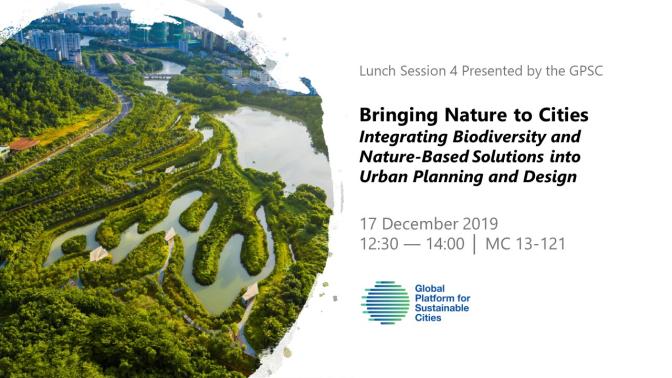
The conventional approach to urban planning adopted by many Chinese cities, and cities elsewhere, is oriented toward economic development – while often incurring the cost of ecological destruction. Professor Yu, an urban planner and architect, advocates that cities adopt an ecological master plan that protects sensitive ecological zones. His methods have fused innovative urban design and urban planning strategies together with nature-based solutions to prevent soil erosion, manage storm-water runoff, and conserve urban biodiversity. In this BBL, Yu will present his work and share approaches he has utilized to protect land from the effects of rapid urbanization, while building a network of green infrastructure to safeguard natural processes and cultural values.
The session will be chaired by Benoit Bosquet (Regional Director for East Asia and Pacific, World Bank) and presented by Kongjian Yu (Professor, Peking University College of Architecture and Landscape Architecture). Rob McDonald (Lead Scientist, The Nature Conservancy) and Xueman Wang (Senior Urban Specialist, World Bank) will join the discussion.