

New Building Regulations Atlas Supports Safer, Greener, and More Resilient Cities
24 SEPTEMBER 2026 /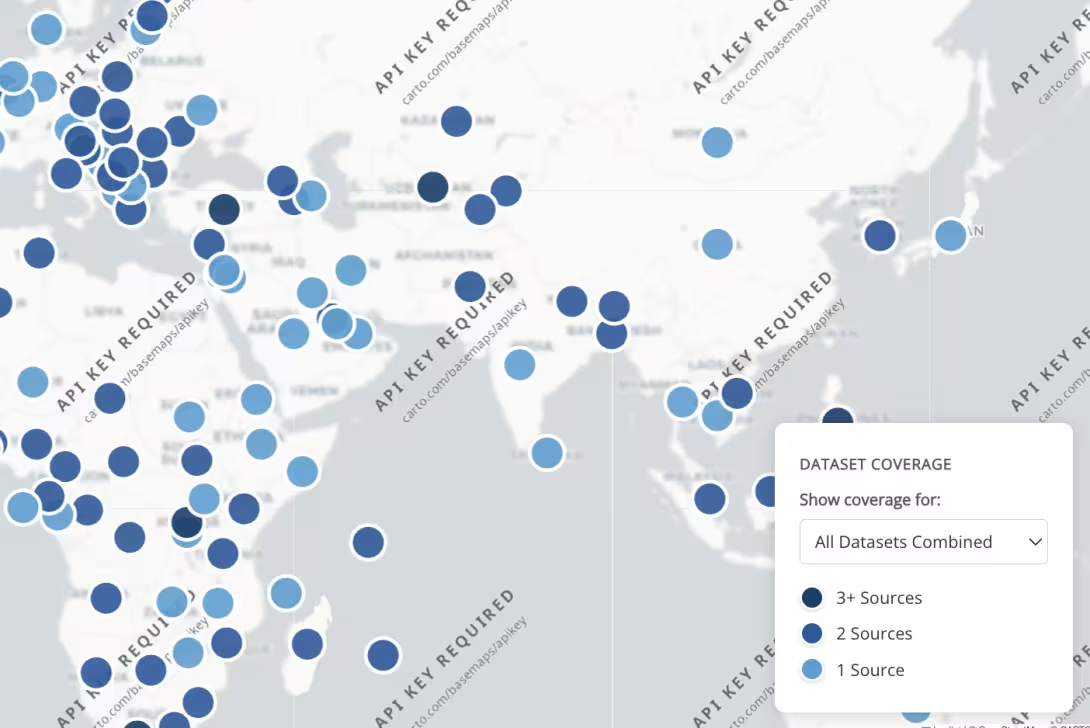
As cities grow and climate and disaster risks intensify, the rules that shape where and how buildings are constructed are becoming increasingly important. Effective building regulations can help cities improve safety and resilience, reduce energy and resource use, promote accessibility, and ensure that rapid urban growth does not lock in risks for decades to come.
The World Bank Group has launched the Building Regulations Atlas, a new open-access platform that makes global building regulatory data easier to explore, compare, and use. Bringing together information across 152 economies, the interactive tool provides policymakers, practitioners, and development partners with a global view of regulatory systems and a practical resource for identifying gaps and opportunities for reform.
From global data to practical action
The Atlas consolidates 373 indicators across three core areas of the building value chain:
- Spatial Planning, including planning and zoning and the consideration of land use, hazards, and environmental impacts;
- Building Regulations, covering areas such as structural design, fire safety, green buildings, and universal accessibility; and
- Compliance Mechanisms, including building control, professional registration, transparency, and dispute resolution.
By bringing these dimensions together in one platform, the Atlas allows users to explore individual country profiles, understand the status of existing regulatory frameworks, and identify areas where further analysis or reform may be needed.
The platform draws on complementary World Bank Group datasets covering resilience, energy efficiency, the business environment, and the built environment. Country data can also be downloaded for further analysis, making the Atlas useful both as a benchmarking resource and as an entry point for policy dialogue and technical assistance.
Supporting more sustainable urban development
Building regulations are a critical but sometimes overlooked component of sustainable urban development. They influence not only the safety of individual buildings but also broader urban outcomes—from climate resilience and energy efficiency to accessibility and the quality of the built environment.
For cities experiencing rapid growth, strengthening these frameworks early can help guide investment toward safer, greener, and more inclusive development. The Building Regulations Atlas makes it easier for governments and practitioners to understand existing conditions, learn from experiences elsewhere, and identify priorities for action.
The platform is designed to continue evolving as new datasets, economies, and indicators become available, providing a growing global knowledge base for regulatory reform.
Originally published on the World Bank Group Blogs Page.