

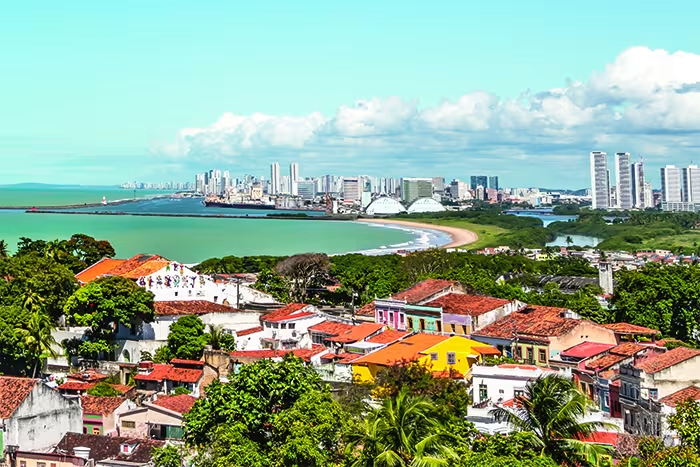
GEF’s 2020 strategy emphasizes support for the transformational change needed to create environmental impacts on a broad scale; more specifically, it supports broad coalitions of committed stakeholders and focuses on scalable activities. Beginning in 2015, the GEF-6 Sustainable Cities program has promoted integrated approaches that address distinct, time-bound global environmental challenges. Urbanization has played a central role in the world’s economic growth, but it has also caused environmental degradation. The Sustainable Cities program provides policy and governance support to facilitate integrated urban planning, management, and financing that leads to sustainable and resilient development and sound ecosystem management.
Latest Knowledge Resources
View all
A decade of lessons from the GEF-6 Sustainable Cities Program and its impact on future urban development.
Report
Climate Change Infrastructure Project Screening Framework (for Mitigation and Adaptation)
This tool helps catalyzing the next generation of investments in cities for climate-smart, greener, more resilient, and inclusive urbanization.Tool