

Cities exist, grow, and prosper because they take advantage of scale economies and specialization wrought by agglomeration. But output growth inevitably stresses transport infrastructure because production requires space and mobility. To prevent congestion from crowding out agglomeration benefits and to expand the supply of urban land, cities must invest in transport infrastructure. Yet balancing the growing demand for infrastructure with its supply is often difficult.
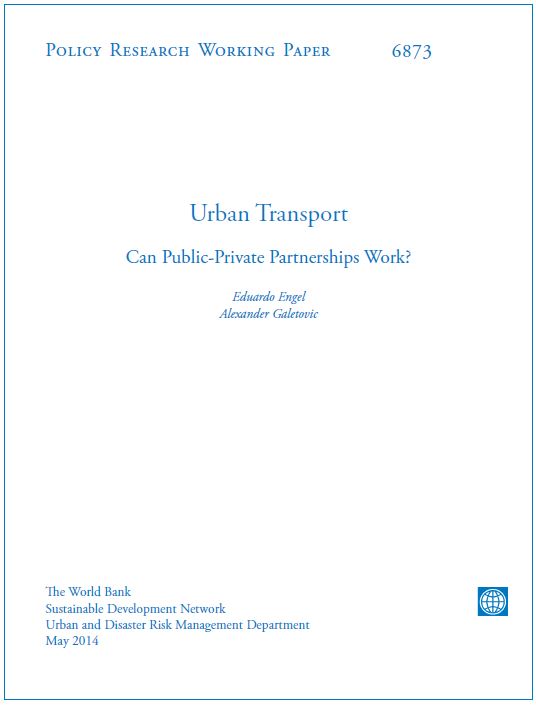
In particular, many cities lack the funding to maintain and expand streets and urban highways. Also problematic is that roads are managed like a social service rather than subjected to market discipline. This leads to the central question of this chapter: Can public-private partnerships (PPPs) deal with these problems better than the conventional public provision and ensure proper maintenance, timely expansion, and less congestion? And if so, how? To answer these questions, the paper examines what PPPs can do and what they need to work, focusing in particular on the role of institutions. This is followed by an investigation of common PPP pitfalls and the ways in which they can be avoided. The paper concludes with a case study of a successful transportation PPP in Chile that emphasizes the importance of planning.