

Partner Events
Cities on the Frontline: Holistic Resilience in Action towards COVID-19
09 April 2020
,
08:30
/
Online
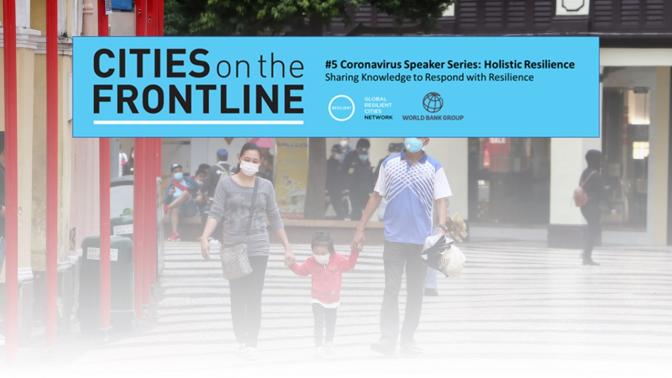
Photo by Macau Photo Agency on Unsplash
Welcome to the 5th edition of the Series on Cities on the Frontlines, exploring how cities around the world are responding to Covid-19. For this week’s session, we will welcome Alexandria McBride, Assistant to the City Administrator/Chief Resilience Officer, Oakland (US) and Amy Knowles, Chief Resilience Officer, Miami Beach/Resilient 305 (US). They shared with us how their administration responding to the crisis in an integrated way under this topic of “Holistic Resilience in Action towards Covid-19”. Click on the links to download the materials.
Speakers
"Leveraging Philantropy and Building Community Resilience through the Emergency Operations Center" by Alexandria McBride, Chief Resilience Officer, City of Oakland video | presentation
"Holistic resilience" by Amy Knowles, Chief Resilience Officer, City of Miami Beach video | presentation
Cities in the Frontline is jointly organized by the Global Resilient Cities Network and the World Bank City Resilience Program. For access to the previous sessions’ materials, please visit this page that is being updated regularly.
Questions about the Speaker’s Series, additional registration requests, or related items can be directed to Nini Purwajati at info@resilientcitiesnetwork.org