

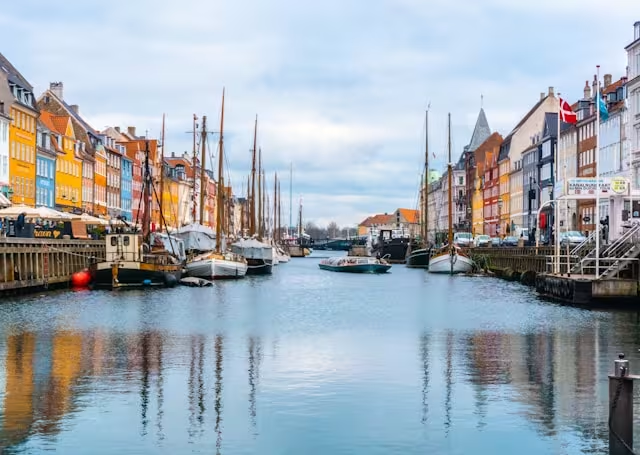
Copenhagen

AREA:
77.2 km²(29.7 sq mi)
POPULATION:
569,557
Denmark

Copenhagen is an active member of the Global Platform for Sustainable Cities (GPSC) Urban Nature Network, contributing its long-standing experience in integrating nature-based solutions, climate adaptation, and circular economy practices into urban planning. Globally recognized as one of the most sustainable cities, Copenhagen has pioneered green infrastructure, stormwater management, and low-carbon mobility systems that enhance both resilience and quality of life. Through its participation in GPSC workshops and peer-learning exchanges, the city shares lessons from its Climate Adaptation Plan and Green Roof Strategy, which demonstrate how nature and design can coexist to mitigate flooding, improve biodiversity, and foster social well-being. Copenhagen’s leadership exemplifies how cities can achieve ambitious climate goals while creating vibrant, inclusive, and nature-positive urban environments.
Recent Initiatives

Transit-Oriented Development

What is TOD? Why TOD Matters From Concept to Practice Making TOD Work Explore Resources Transit-Oriented Development (TOD) is an integrated approach to urban planning that aligns transport, land use

Municipal PPP

What is Municipal PPP? Why Municipal PPP Matters Understanding the Context The PPP Project Cycle Municipal PPP Framework Municipal Public-Private Partnerships (PPPs) are long-term collaborations

Gender and Cities

Why Gender Matters Our Approach What We Do Explore Our Resources Featured Resources Gender equality is essential to achieving sustainable, resilient, and inclusive cities. Climate change
Related Content

The Copenhagen Model: a Publicly Owned, Privately Run Corporation - Case Study In the late 1980s, Copenhagen wrestled with the challenge of how to use the city’s underperforming assets to build large-scale infrastructure. The city responded to the challenge with an innovative
Knowledge Product