

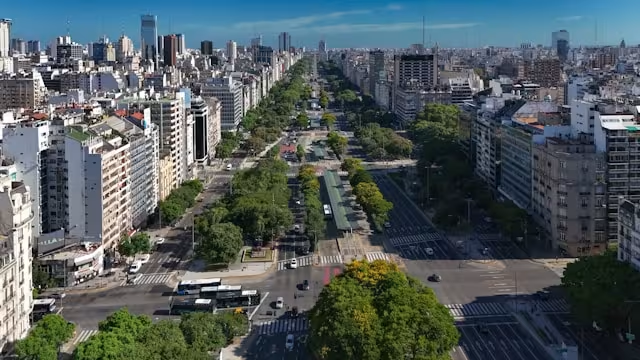
Buenos Aires, Argentina’s largest city and economic hub, participates in the GEF-7 UrbanShift program implemented by UNEP in partnership with the Ministry of Environment and Sustainable Development. With nearly 3 million residents and over 3 million daily commuters from the surrounding metropolitan area, the city faces complex challenges related to congestion, air quality, and heat stress. Building on its Green Buenos Aires Plan, which seeks to provide green space access within 30 meters for almost all residents, UrbanShift supports the city in developing an interconnected network of low-emission green corridors across the Buenos Aires Metropolitan Area. The initiative emphasizes nature-based and inclusive solutions co-created with local communities, enhancing biodiversity, mobility, and climate resilience—particularly in the southern, lower-income neighborhoods—while positioning Buenos Aires as a national leader in urban sustainability and climate action.