

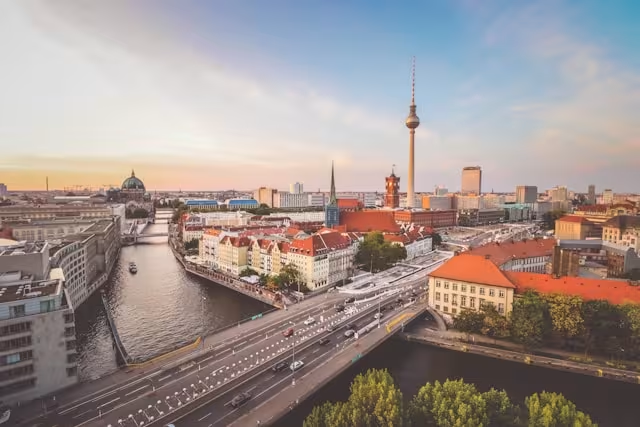
Berlin is an active member of the Global Platform for Sustainable Cities (GPSC) Urban Nature Network, contributing its experience in biodiversity conservation, adaptive urban planning, and green infrastructure integration. The city has long been a pioneer in transforming post-industrial and underused urban areas into multifunctional green spaces that enhance resilience and social inclusion. Through initiatives such as its Biotope Area Factor and the Strategy for Biodiversity in Berlin, the city embeds ecological principles into urban design and land-use planning. Berlin has also participated in GPSC workshops and peer-learning activities, sharing its expertise on urban greening, citizen engagement, and the governance of nature-based solutions. Its leadership demonstrates how cities can reconcile density with ecological health, positioning Berlin as a model for regenerative and people-centered urban development in Europe.