

Transit-Oriented Development Implementation Resources and Tools

December 31, 2020

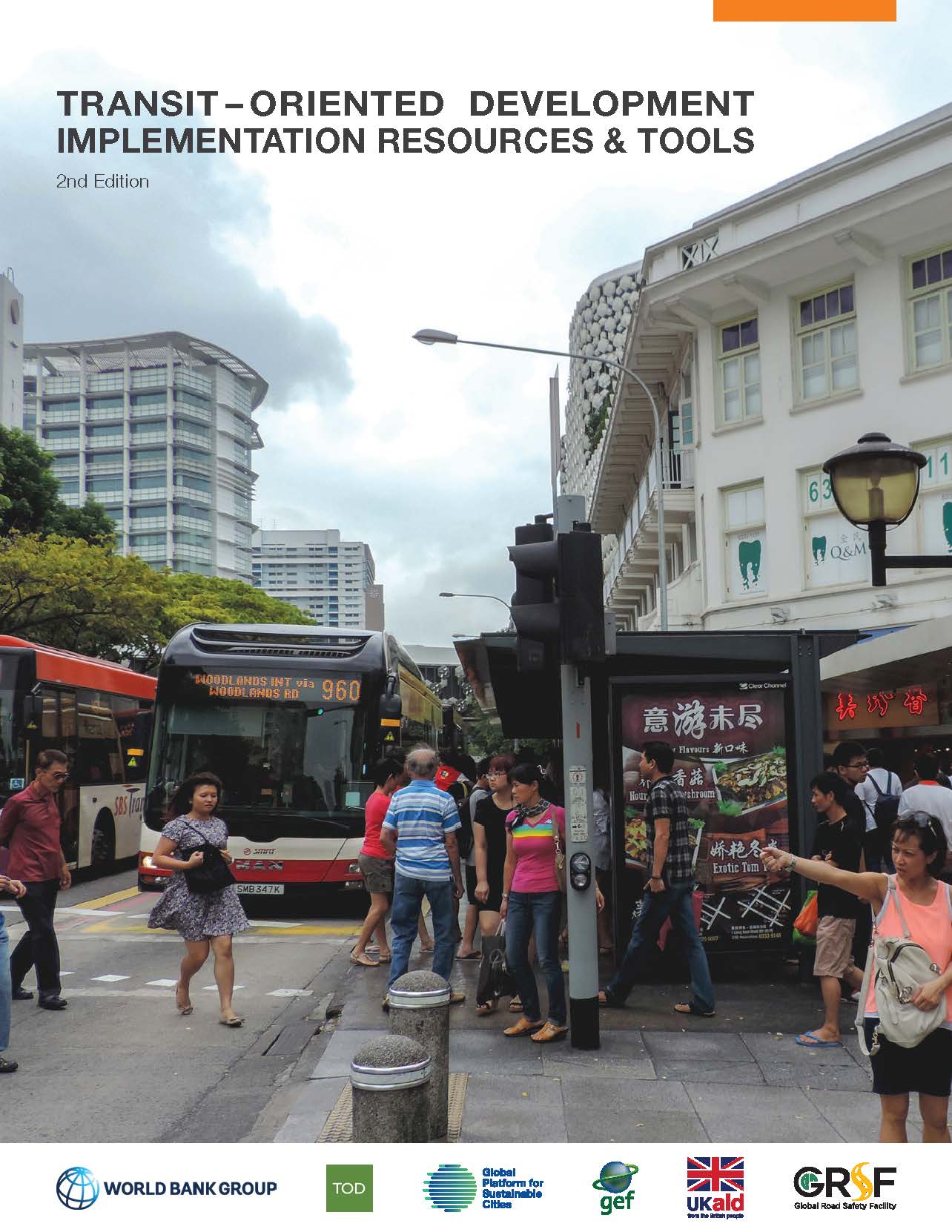
This toolkit provides a compendium of resources for Transit-Oriented Development stakeholders to navigate each phase of the TOD process: Assessing, Enabling, Planning and Design, Financing, and Implementing. It includes how-to guides, analytical tools, communication tools, resources, case studies and template terms of reference for each phase. The latest addition fully embeds road safety consideration at all steps of the process. Transit-oriented development, commonly known as TOD, is a planning and design strategy that focuses on creating urban development patterns which facilitate the use of public transit, walking and cycling, as primary modes of transport and which supports vibrant, diverse and livable communities. This is achieved by concentrating urban densities, communities and activities within a 5-10 minute walking distance from mass rapid transit stations (both bus and rail-based), developing quality urban space and providing convenient and efficient access to a diverse mix of land uses. TOD brings together elements of land use and transport planning, urban design, urban regeneration, real estate development, financing, land value capture, and infrastructure implementation to achieve more sustainable urban development. Since TOD implementation can be complex, it is essential that cities understand the dynamics at play related to all city systems- real estate economics, transit routing, infrastructure design, land use planning and zoning, the development of the local economy through urban regeneration, and urban design- to achieve the concept’s full potential. TOD, as a tool, enables city actors to negotiate through varying urban priorities to ultimately prioritize inclusion and resilience in an optimized environment. The World Bank considers these priorities as the bedrock of successful TODs.

Related content
View all

Mobility

Best Practices and Lessons Learned: Tactical Urbanism to Design Cities for People

It is estimated that around 600,000 motored vehicles enter the city of Asunción each day, adding a lot of pressure to the already dense traffic. The car-centric design of cities like Asunción, Ñemby
Knowledge Product

Learn more

Mobility

Connected Urban Growth: Public-Private Collaborations for Transforming Urban Mobility

New mobility services could improve the lives of all urban inhabitants. This first ever global survey finds that applying three types of new mobility services – electric, on-demand minibuses
Knowledge Product

Learn more

Mobility

Safe Access Manual: Safe Access to Mass Transit Stations in Indian Cities

The Safe Access Manual offers recommendations to develop safe access to mass transit stations in Indian cities. An investment of 15 billion USD has already been made across various cities to develop
Knowledge Product

Learn more