Chongqing

AREA:
82,403 km2 (31,816 sq mi)
POPULATION:
32,054,159
China

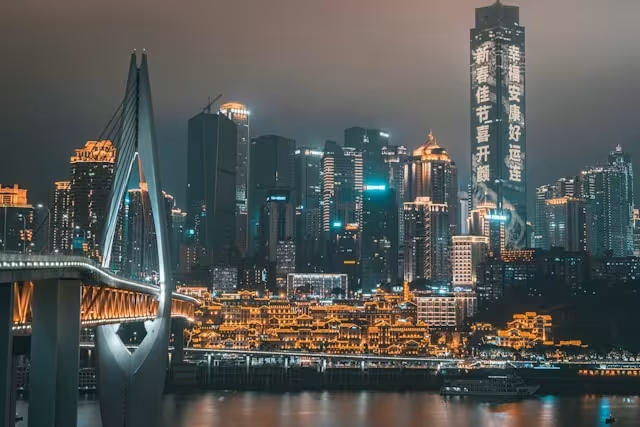
Chongqing, southwestern China’s largest city and an important inland port on the Yangtze River, participates in the GEF-7 UrbanShift program to enhance ecological resilience and energy efficiency. With over 30 million inhabitants and complex topography, the city faces challenges from flooding, limited flat land, and urban sprawl. UrbanShift supports Chongqing in applying nature-based solutions and ecological planning in Bishan District to reduce flood risk and guide sustainable land use. In the historic Yuzhong District, the program promotes an integrated energy-management system to lower emissions and improve building performance. Together, these interventions help balance Chongqing’s industrial base with climate-resilient and inclusive urban growth.

Recent Initiatives

Transit-Oriented Development

What is TOD? Why TOD Matters From Concept to Practice Making TOD Work Explore Resources Transit-Oriented Development (TOD) is an integrated approach to urban planning that aligns transport, land use

Municipal PPP

What is Municipal PPP? Why Municipal PPP Matters Understanding the Context The PPP Project Cycle Municipal PPP Framework Municipal Public-Private Partnerships (PPPs) are long-term collaborations

Gender and Cities

Why Gender Matters Our Approach What We Do Explore Our Resources Featured Resources Gender equality is essential to achieving sustainable, resilient, and inclusive cities. Climate change
Related Content

CHONGQING 2035 Each part of the Chongqing 2035 report is downloadable below. Overview Report: Spatial and Economic Transformation for a Global City Supporting Report 1: Spatial Transformation Strategy Increasing
Knowledge Product