

Zimbabwe
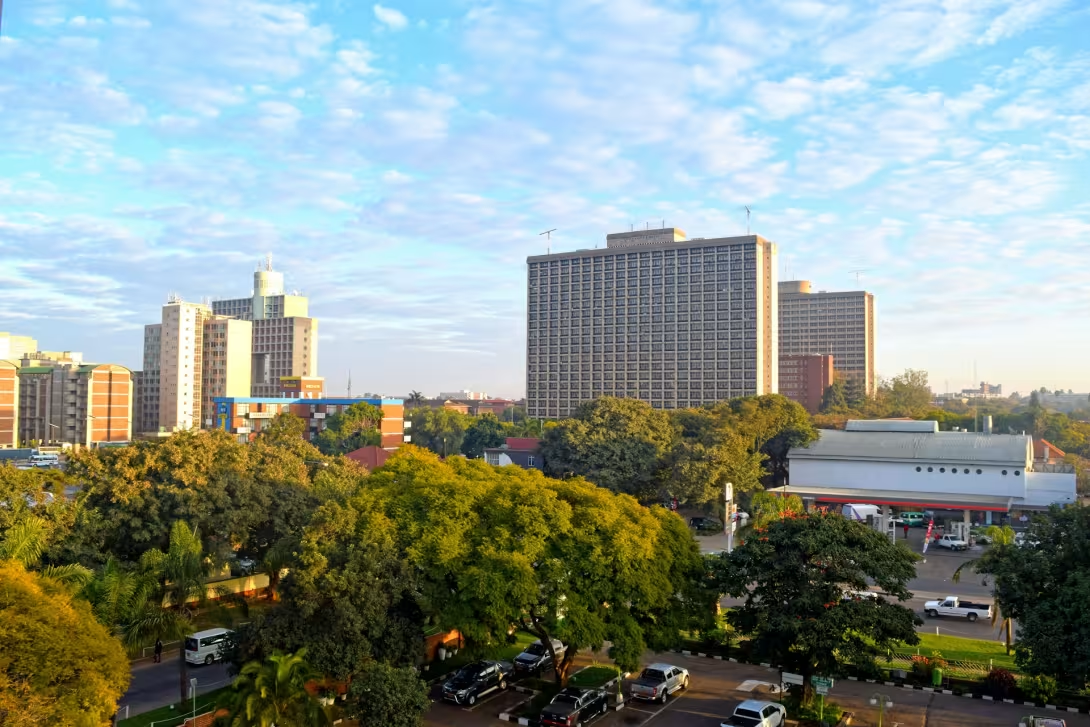
Photo by Omoniyi David / Unsplash
Zimbabwe participates in the GEF-8 Sustainable Cities Integrated Program (SCIP) through the cities of Harare and Bulawayo, advancing integrated urban planning, climate resilience, and nature-based solutions in a context of rapid urbanization and significant environmental pressures. Both cities face rising challenges related to water scarcity, land degradation, informal settlement expansion, and increasing vulnerability to floods and droughts.
Through GEF-8 SCIP and the GPSC Global Knowledge Platform, Zimbabwe is strengthening urban governance, enhancing wetland protection, piloting green and circular infrastructure, and improving disaster risk management. The program’s focus on restoring critical ecosystems and mobilizing investment for resilient urban services supports long-term climate adaptation while improving the well-being of vulnerable communities. Zimbabwe’s engagement contributes valuable lessons to the global GEF network on how cities can integrate ecological restoration and low-carbon approaches to build sustainable, inclusive urban futures.
UNDP serves as the Implementing Agency. The Executing Agency is the Ministry of Environment, Climate and Wildlife
This project focuses on addressing the critical environmental challenges in Zimbabwe's urban areas, particularly Harare and Bulawayo, through a multi-pronged approach. It aims to promote integrated governance, enhance the capacity of local authorities, and implement nature-based solutions to address issues like pollution, deforestation, and climate vulnerability. The project will assess current policies and capacities, implement pilot projects, and disseminate successful strategies for wider adoption. It also emphasizes the importance of data collection and gender-sensitive approaches to ensure that all communities benefit from the project’s outcomes. In alignment with national and international sustainability frameworks, the project will foster partnerships with the private sector, international organizations, and civil society to create long-term, impactful solutions.
Component 1 – Integrated Urban Planning, Policy Reform, and Institutional Strengthening
- Strengthen urban planning and land-use management frameworks to integrate biodiversity conservation, climate resilience, and sustainable land management principles.
- Develop and operationalize ecosystem-sensitive spatial plans incorporating wetlands, green corridors, and degraded land restoration priorities.
- Establish inter-agency coordination mechanisms to improve environmental governance and cross-sector planning alignment.
- Strengthen municipal institutional capacity for sustainable urban management through targeted technical training and policy support.
- Integrate gender-responsive and socially inclusive approaches into urban governance and planning processes.
Component 2 – Nature-Based Solutions, Ecosystem Restoration, and Circular Urban Systems
- Restore degraded urban and peri-urban ecosystems, including wetlands, green spaces, and areas affected by illegal sand mining.
- Implement agroforestry and urban agriculture interventions to enhance food security and ecosystem services in peri-urban communities.
- Develop and rehabilitate green corridors, lowland green areas, and designated city parks to improve ecological connectivity and climate adaptation.
- Establish nutrition gardens and community-based green enterprises to strengthen livelihoods and environmental stewardship.
- Promote sustainable solid waste management solutions, including landfill rehabilitation and circular economy practices.
- Implement erosion control and land restoration measures to stabilize vulnerable landscapes and enhance carbon sequestration.
Component 3 – Climate Mitigation, Resource Efficiency, and Sustainable Urban Infrastructure
- Implement low-emission urban interventions to reduce GHG emissions through improved land-use practices and ecosystem restoration.
- Strengthen monitoring systems for AFOLU-related carbon sequestration and emissions reduction aligned with GEF indicators.
- Promote energy and resource efficiency improvements in municipal systems where applicable.
- Develop scalable investment models for green and resilient urban infrastructure.
Component 4 – Knowledge Management, Capacity Building, and Scaling
- Establish a knowledge management framework to document lessons learned and support replication of sustainable urban models.
- Deliver technical training and community awareness programs on NbS, urban agriculture, and climate resilience.
- Facilitate participation in the Global Platform for Sustainable Cities (SCIP) for regional and global knowledge exchange.
- Develop monitoring and evaluation systems aligned with GEF core indicators and gender-disaggregated beneficiary tracking.
- Strengthened governance structures through enhanced multi-sectoral collaboration and improved local capacities for environmental management.
- Successful implementation of nature-based solutions, including urban reforestation, wetlands restoration, and sustainable waste management practices.
- Improved data collection and analysis, particularly on urban food systems and green spaces, to inform evidence-based policy decisions.
- Increased financial sustainability of urban sustainability initiatives through innovative financing models and public-private partnerships.
- Enhanced community engagement and gender-responsive interventions that promote inclusive and equitable access to sustainable urban services.
- A robust knowledge management framework that disseminates successful strategies and lessons learned, contributing to global sustainability initiatives.
Total GEF Grant (USD)
4,000,000
Total Co-financing (USD)
15,403,000
World Bank Country Profile (Data Portal)
For broader socioeconomic and environmental context, consult the World Bank Country Data Profile. It provides up-to-date indicators on economic performance, social development, climate and environmental metrics, as well as an overview of World Bank operations and financing in the country. Access the country profile here.
GEF Country Profile
For information on Global Environment Facility engagement, see the GEF Country Profile. It presents an overview of GEF-funded projects, thematic areas of intervention, implementing partners, and country resource allocations, offering insight into environmental investment priorities and ongoing initiatives. Access the country profile here.
WOFI Country Profile
For additional insights on subnational public finance, see the OECD Subnational Government Finance Observatory (WOFI) Country Profile. It provides internationally comparable data on revenues, expenditures, investment, debt, and fiscal arrangements across levels of government, offering a useful reference on fiscal capacity and decentralization. Access the country profile here.