Algeria
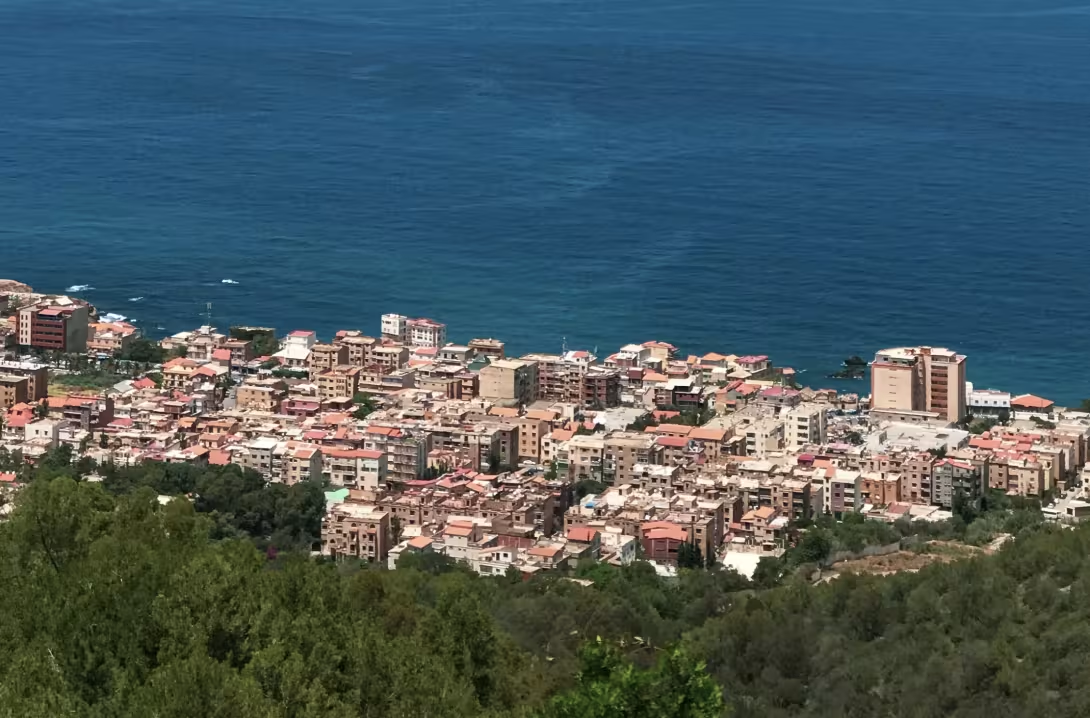
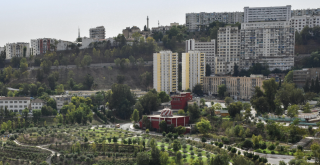
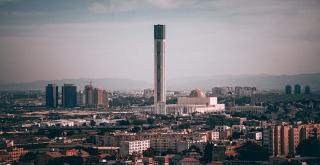
Algeria participates in the GEF-8 Sustainable Cities Integrated Program (SCIP) through the project Reshaping Algeria’s Cities for a Clean and Healthy Environment Today and Tomorrow (REACT). As the country experiences sustained population growth and rapid urban expansion, Algeria is developing five new cities—Bouinan, Sidi Abdallah, Boughezoul, Hassi Messaoud, and El Menéa—to accommodate approximately 1.1 million residents.
These emerging urban centers present a unique opportunity to embed sustainability principles from the outset. Through GEF-8 SCIP and the GPSC Global Knowledge Platform, Algeria is integrating nature-based solutions, circular economy approaches, and low-carbon infrastructure into national and local planning systems, positioning its new cities as models for resilient and nature-positive development.
BOAD serves as the Implementing Agency. The Executing Agencies are the Ministry of Housing, Urban Planning and the City and the Ministry of Environment and Renewable Energy.
Project Title: Reshaping Algeria’s Cities for a Clean and Healthy Environment Today and Tomorrow (REACT)
GEF Implementing Agency: Food and Agriculture Organization of the United Nations (FAO)
Executing Partners: Ministry of Housing, Urban Planning and the City; Ministry of Environment and Renewable Energy
Planned Duration: June 2025 – June 2030
Algeria’s new cities are being developed with investments in transport, energy, building technologies, and urban design. However, planned greening efforts require deeper integration of nature-based solutions (NBS) to reduce ecological footprints and maximize environmental and social benefits.
The REACT project aims to systematically integrate NBS into urban and regional spatial planning to promote biodiversity conservation, reduce land degradation, and contribute to climate mitigation and adaptation. It strengthens technical capacity to identify, design, and implement innovative NBS—including urban forestry, productive green spaces, and circular resource systems—while leveraging both public and private investments. These five cities will serve as national demonstration models for future sustainable urban development.
The project aligns with Algeria’s National Biodiversity Strategy and Action Plan, Nationally Determined Contributions (NDCs), Land Degradation Neutrality targets, National Strategy on Land Use Planning, and the Presidential Initiative on New Cities.
Component 1 – Integrated and inclusive urban planning strategies and city leadership development for sustainable urbanization to halt land degradation
Three Strategic Environmental Assessments (SEAs) are developed to guide best interventions for sustainable growth of cities. Three Local Sustainability Charters ensuring sustainable management and urban livability developed by applying a participative and co-design approach with local stakeholders covering 31.983 ha2. Practical mechanisms for implementing the regulatory framework and strengthening institutions for safe reuse and management of organic liquid and solid waste.
Component 2 – Ecosystem-based approaches and resilient growth of Algeria’s new cities supported through best practices
One gender-sensitive feasibility study designed for the multifunctional green corridor in Sidi Abdellah. Innovative financial models identified for scaling ecosystem-based approaches and circular economy practices in Sidi Abdellah, accessible to anyone but with a specific focus on women and youth. Pilot implemented of greening and forestry initiatives along the green corridor (55 ha) in Sidi Abdellah. One gender-sensitive feasibility study and management plan prepared to support the Ramsar classification of Boughezoul lake. Innovative financial models identified for scaling ecosystem-based approaches and circular economy practices in Boughezoul, accessible to anyone but with a specific focus on women and youth. Implementation of greening and ecosystems - based interventions in the West Zone of the lake (Boughezoul Lake) (1000 ha). One gender-sensitive feasibility study prepared to support the development of the green belt around the new city promoting innovative agroforestry and urban agriculture interventions in Hassi Messaoud. Innovative financial models identified for scaling ecosystem-based approaches and circular economy practices in Hassi Messaoud, accessible to anyone but with a specific focus on women and youth. Pilot smart agro-forestry and water harvesting and irrigation practices implemented at the south green belt (300 ha5) of Hassi Messaoud.
Component 3 – Capacity Building, Knowledge Management
Developing technical and professional trainings in climate-positive planning, nature-based regeneration, design and impact monitoring, especially focusing on dryland conditions, strengthening the activity participation of women & youth, in decision-making and circular economy solutions. National knowledge products and one publicly accessible platform are established to disseminate insights, build capacities, and foster city-to-city cooperation on sustainable urban development in Algeria, with a focus on best practices for stakeholder empowerment, with a specific focus on women and youth. Global Collaboration and knowledge exchange are in place through participation in the SCIP Global Platform (GPSC) events and regional academies.
Enhanced biodiversity conservation and reduced land degradation through advanced NBS green space planning systems.
Improved climate change mitigation and adaptation via expanded urban green spaces, native habitat restoration, and forest cover.
Demonstrated circular economy approaches in waste and wastewater management to reduce environmental impacts.
Increased economic opportunities and food security through urban agriculture and local value chains.
Improved quality of life and gender empowerment through sustainable urban forestry and green economic activities.
Strengthened governance models and policy coherence to create an enabling environment for achieving global environmental benefits.
Total GEF Financing:
USD 3,333,333
Total Co-financing:
USD 100,000,000
World Bank Country Profile (Data Portal)
For broader socioeconomic and environmental context, consult the World Bank Country Data Profile. It provides up-to-date indicators on economic performance, social development, climate and environmental metrics, as well as an overview of World Bank operations and financing in the country. Access the country profile here.
GEF Country Profile
For information on Global Environment Facility engagement, see the GEF Country Profile. It presents an overview of GEF-funded projects, thematic areas of intervention, implementing partners, and country resource allocations, offering insight into environmental investment priorities and ongoing initiatives. Access the country profile here.
WOFI Country Profile
For additional insights on subnational public finance, see the OECD Subnational Government Finance Observatory (WOFI) Country Profile. It provides internationally comparable data on revenues, expenditures, investment, debt, and fiscal arrangements across levels of government, offering a useful reference on fiscal capacity and decentralization. Access the country profile here.
Theme