

From Planning to Action: Mainstreaming Climate Change Adaptation Into Development
30 SEPTEMBER 2018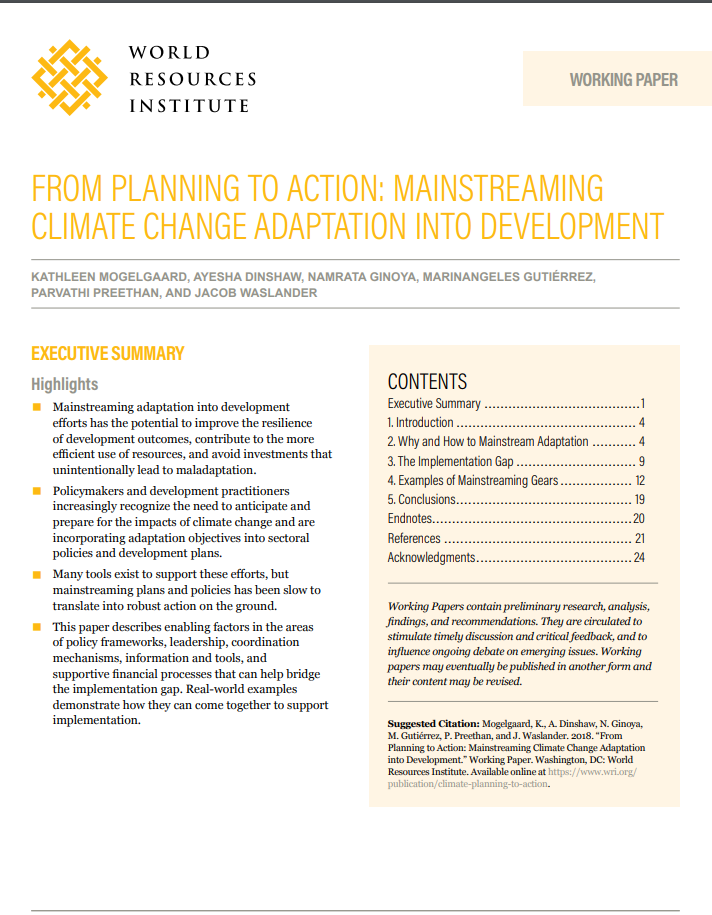
As extreme weather events become more frequent and stronger, it is critical that policymakers and development practitioners incorporate climate change adaptation objectives into their sectoral policies and plans. This process, called mainstreaming, has the potential to improve the resilience of development outcomes, contribute to the more efficient use of resources, and avoid investments that unintentionally lead to maladaptation. But mainstreaming requires coordination among multiple actors, institutions, and processes, which can make the journey from a plan on paper to action on the ground slow.
WRI has identified factors that can work together, like a set of gears, to help accelerate the move from mainstreaming commitments to implementation. This working paper describes enabling factors in the areas of policy frameworks, leadership, coordination mechanisms, information and tools, and supportive financial processes. Real-world examples demonstrate how they can come together to support implementation.