

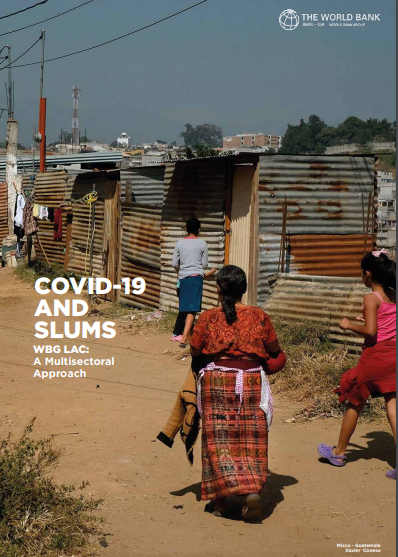
COVID-19 and Slums

29 APRIL 2020

Slum inhabitants are the most vulnerable groups in the short and long-term: The risk exposure to the virus is likely to be exacerbated in slums, where people live in overcrowded conditions, and tend to lack access to basic sanitation services and hygiene, health services, waste management and adequate transportation options. Slum inhabitants are the least resilient to confront shocks: they are mostly informal workers with irregular incomes, higher incidence of poverty, little or no savings. 


Related Content
View all

Inclusivity

Gender and Sustainable Cities

Climate change is set to exacerbate existing inequalities, disproportionately affecting the urban poor and women.
Knowledge Product

Learn more

Inclusivity

Handbook for Gender-Inclusive Urban Planning and Design

This handbook links gender inequality to the built environment and offers practical processes for planning more inclusive cities.
Knowledge Product

Learn more

Inclusivity

Her Home - Housing Finance for Women

The study assesses women’s housing finance demand in Colombia, India, and Kenya, recommending tailored lending products and policy reforms.
Knowledge Product

Learn more