

Primer for Cool Cities: Reducing Excessive Urban Heat – With a Focus on Passive Measures

20 JULY 2020
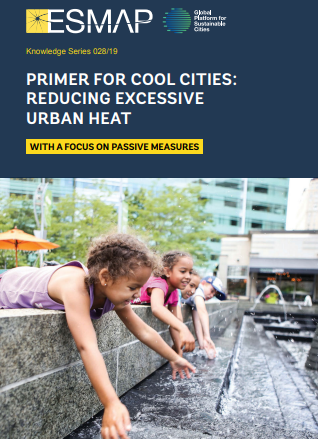
Cities are getting hotter as a result of growing urbanization and global climate change. The negative impacts of temperature increases are significant and touch nearly every aspect of urban life. Protecting populations from extreme heat is one of the key resiliency and sustainability challenges of the twenty- first century. Successfully implementing measures to cool cities will lead to many benefits, including for health, well-being, productivity, air quality, and energy systems.
 
Urban cooling solutions can be deployed in the short term to help mitigate the risk of rising urban air temperatures. This primer and its companion report, Cool City Case Studies: Reducing Urban Heat, provide practical, actionable guidance and examples for implementers, policy makers, and planners tasked with mitigating urban heat impacts.
Related Content
View all

Climate

Urban Flood Risk Handbook: Assessing Risk and Identifying Interventions

This Urban Flood Risk Handbook: Assessing Risk and Identifying Interventions is a roadmap for conducting an urban flood risk assessment in any city in the world. It includes practical guidance for a
Knowledge Product

Learn more

Climate

International Case Studies on Public Communication and Consultation Strategies for Low Emission Zones and Congestion Charging Schemes

The working paper will be part of the “Low Emission Zone/Congestion Charge (LEZ/CC) Public Communication Strategies” series of papers to offer a comprehensive package of public communication
Knowledge Product

Learn more

Climate

Primer for Cool Cities: Reducing Excessive Urban Heat – With a Focus on Passive Measures

Cities are getting hotter as a result of growing urbanization and global climate change. The negative impacts of temperature increases are significant and touch nearly every aspect of urban life
Knowledge Product

Learn more