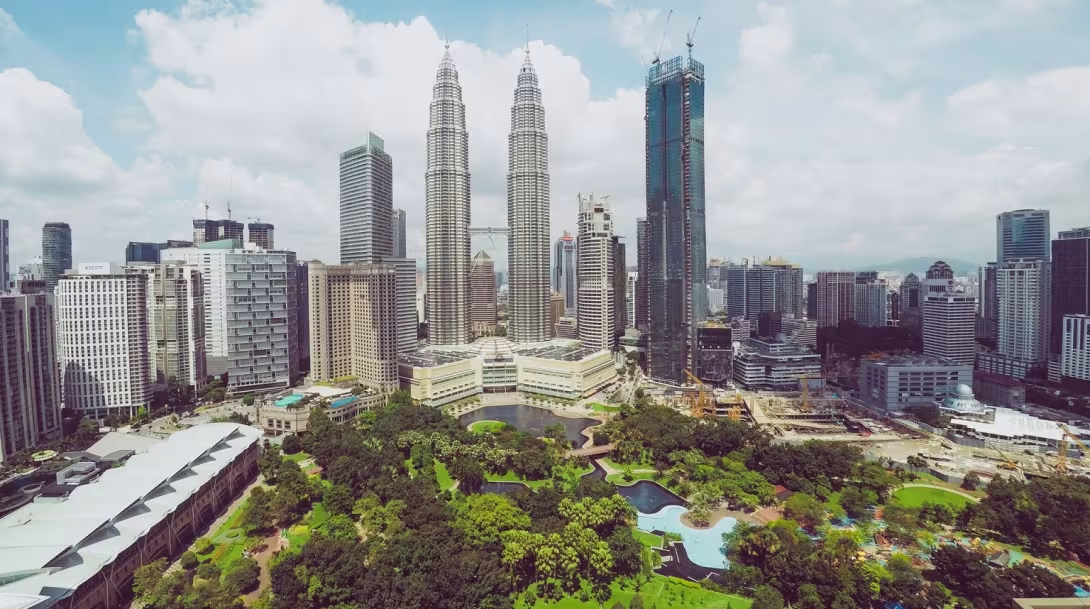
Malaysia International Centre for Sustainable Cities (MyICSC): Gateway to Sustainability

19 September 2025 /
Blog

The GPSC welcomes a new partner to its network: Malaysia International Centre for Sustainable Cities (MyICSC)
 
MyICSC is an initiative to encourage smart city stakeholders to build Sustainable Cities and Communities as per UNDP SDG-11. It offers a powerful opportunity to leverage the knowledge and shared learning of an entire initiative, support the achievement of high performance at all locations, and accelerate the broad-based adoption of innovative advances. MyICSC creates an environment that encourages and facilitates the active sharing of expertise and new insights across a particular community of interest. Shared ideas foster additional insights and knowledge, and successful execution of this role can significantly accelerate the pace of innovation and adoption of best practices across an entire organization. In addition, MyICSC gives opportunities for stakeholders to build a network with others from regional, national and international with the same interest.
Latest Knowledge resources
View all

Nature

Compendium for City Good Practice Series: How Paris Is Leveraging Nature For Climate Resilience

This report, as part of the Compendium for City Good Practice series, highlights Paris's innovative approach to climate resilience through the strategic integration of nature into urban environments. It offers a comprehensive overview of Paris's strategy on urban nature, showcasing how the city is integrating biodiversity into planning, leveraging green spaces, biodiversity corridors, and sustainable landscaping to mitigate the impacts of climate change. The report serves as a valuable resource for cities worldwide seeking to emulate Paris's successful model of

Report

Inclusivity

Toward Developing a Mobility and Gender Index

Although the benefits of a gender-inclusive approach to mobility for transport decarbonization, access to jobs, and human capital advancement have been increasingly recognized globally, this topic has not received sufficient attention. The lack of attention to gendered mobility barriers is partly due to a limited understanding of the wider benefits of inclusive transport services for development, which is caused by the absence of sex-disaggregated mobility data highlighting gender inequalities. One of the obstacles to this gender-inclusive approach is the absence