


New Portal by World Bank on Nature-Based Solutions (NBS)

19 September 2025 /
Blog

The new website, run by the Global Program on Nature-Based Solutions for Climate Resilience, showcases the World Bank’s efforts to implement NBS on the ground. You can see exciting projects we are helping to implement on our interactive project map. The knowledge hub offers a growing repository of World Bank-financed guidance notes, reports, case studies, and more. We hope these inspire and support the planning and implementation of more NBS investments.
 
The Global Program on Nature-Based Solutions for Climate Resilience is a cross-sectoral effort at the World Bank Group with a mission to increase investments in solutions that integrate and strengthen natural systems across regions and sectors. The program involves many World Bank Global Practices: 
 
​By providing operational support, developing targeted knowledge and tools, and forging strategic partnerships, the program aims to lead a shift away from conventional, often gray-infrastructure approaches for addressing climate resilience. We aim to encourage next-generation approaches that integrate nature-based solutions, and hybrid approaches—both of which can help deliver services at lower-costs. Our approach is aligned with World Bank Group strategies, including the Climate Change Action Plan 2021-2025, the COVID-19 Recovery Response, and the Green, Resilient and Inclusive Development (GRID). 
Latest Knowledge resources
View all

Urban Sustainability Framework

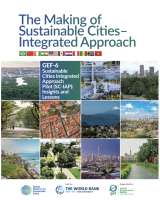
The Urban Sustainability Framework (USF) is a practical tool developed by the Global Platform for Sustainable Cities (GPSC) to help cities plan, finance, and implement integrated sustainability strategies. Designed for policymakers and practitioners, the USF supports cities in moving beyond sector-by-sector planning toward a holistic approach that balances economic growth, environmental stewardship, and social inclusion. At its core, the USF helps cities answer three fundamental questions: Where are we now? Where do we want to go? How do we get

Climate

The city-industry-climate nexus: Cities as engines of global net-zero transitions in a shifting world

By 2050, almost two-thirds of the world’s population will live in cities, which already consume most of the world’s energy and emit the majority of greenhouse gases. This makes urban areas central to both the causes of climate change and the solutions. The white paper argues that decarbonizing cities is not only environmental policy, but a strategic industrial agenda. It introduces the “city-industry-climate nexus,” where infrastructure, production systems, value chains, and climate action converge. Cities host the industries that supply

Report

DOWNLOADS