

GPSC Side Event at GEF Sixth Assembly: Leveraging Urban Solutions for Global Environmental Benefits
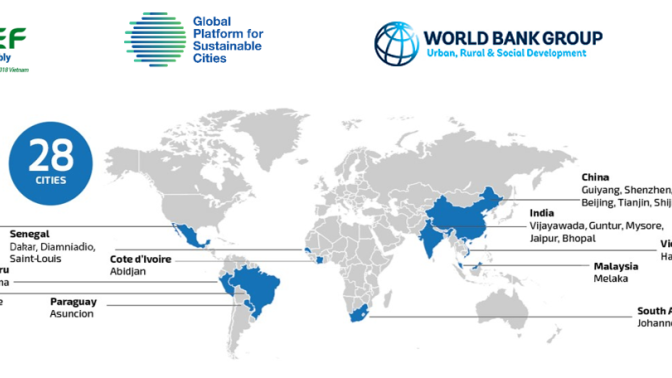
The Global Platform for Sustainable Cities, or GPSC www.thegpsc.org, brings collaborators together to scale-up sustainable development solutions that promote an integrated approach to urban planning. Led by the World Bank and supported by the Global Environment Facility (GEF), the platform comprises 28 cities across 11 countries and a wide range of collaborators. These collaborators include multilateral development banks, the United Nations, and various other institutions, experts and Knowledge Partners.
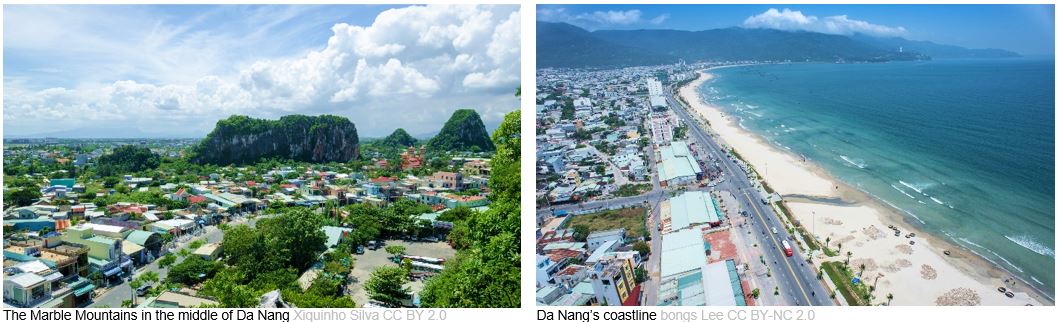
GPSC’s event in Da Nang will demonstrate how cities can respond to their development challenges by tapping into the platform’s practical knowledge, scalable solutions, and financing opportunities which encourage urban solutions for environmental benefits. During the event the International Finance Corporation (IFC) will join GPSC as an Investment Partner. An overview will be given of GPSC’s activities since being founded in 2016, along with the platform’s next steps heading towards GEF-7. Lastly, a panel comprising representatives from a diverse range of GPSC’s collaborators will discuss how cities can further leverage the solutions offered by GPSC to advance global environmental benefits. We hope you can join us for this event in Da Nang.
Provisional Event Program
|
“Leveraging Urban Solutions for Global Environmental Benefits” Tuesday, 26 June 2018, 13:30 – 15:00 Hue Room, Ariyana Conference Center |
|
|
13:30 – 13:40 |
Opening Remarks
|
|
13:40 – 13:50 |
GPSC’s Journey and Next Steps Forward
|
|
13:50 – 14:00 |
MoU Ceremony for UN-Habitat Joining GPSC as a Knowledge Partner 1. Signing of the Memorandum of Understanding (MoU) between UN-Habitat and the World Bank.
2. Remarks by UN-Habitat’s Executive Director |
|
14:00 – 14:05 |
Announcement of IFC Joining GPSC as an Investment Partner 1. Welcoming of the International Finance Corporation (IFC) to GPSC
2. Remarks by IFC’s Cities Initiative
|
|
14:05 – 15:00 |
Panel Discussion: “Leveraging Urban Solutions for Global Environmental Benefits” Moderator:
Panelists:
|