

Partner Events
Cities on the Frontline: Cities for a Resilient Recovery
07 May 2020
,
08:30
/
Online
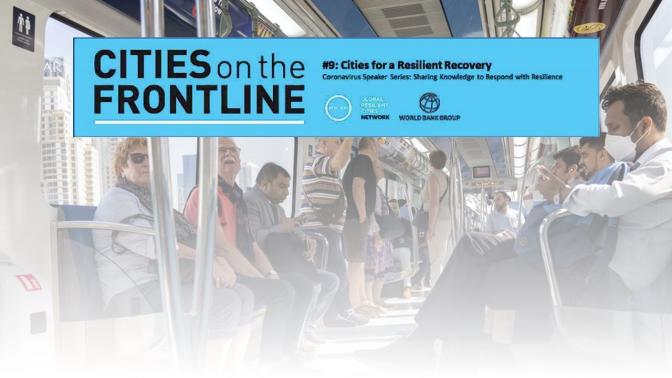
Welcome to the 9th edition of our Speakers Series on Cities on the Frontline, analyzing how cities around the world are responding to Covid-19. This session explores practical ways to shift urban development towards a more resilient future starting today. GRCN and its community of CROs is launching a global Coalition of Cities for a Resilient Recovery, which builds on continuing partnership with the World Bank City Resilience Program to facilitate resilient recovery planning amongst the broader resilience community. We are joined by Grainia Long, Commissioner for Resilience for Belfast, Toby Kent, Chief Resilience Officer for Melbourne, and Sameh Wahba, Global Director for the World Bank’s Urban, Disaster Risk Management, Resilience, and Land Global Practice, who are sharing their current thinking and approaches towards resilient recovery planning.
Cities in the Frontline is jointly organized by the Global Resilient Cities Network and the World Bank City Resilience Program. For access to the previous sessions’ materials, please see this page that is being updated regularly.
Questions about the Speaker’s Series, additional registration requests, or related items can be directed to Nini Purwajati at info@resilientcitiesnetwork.org