

World Bank and City of Paris Partner to Support Sustainable Cities
19 SEPTEMBER 2025 /Blog
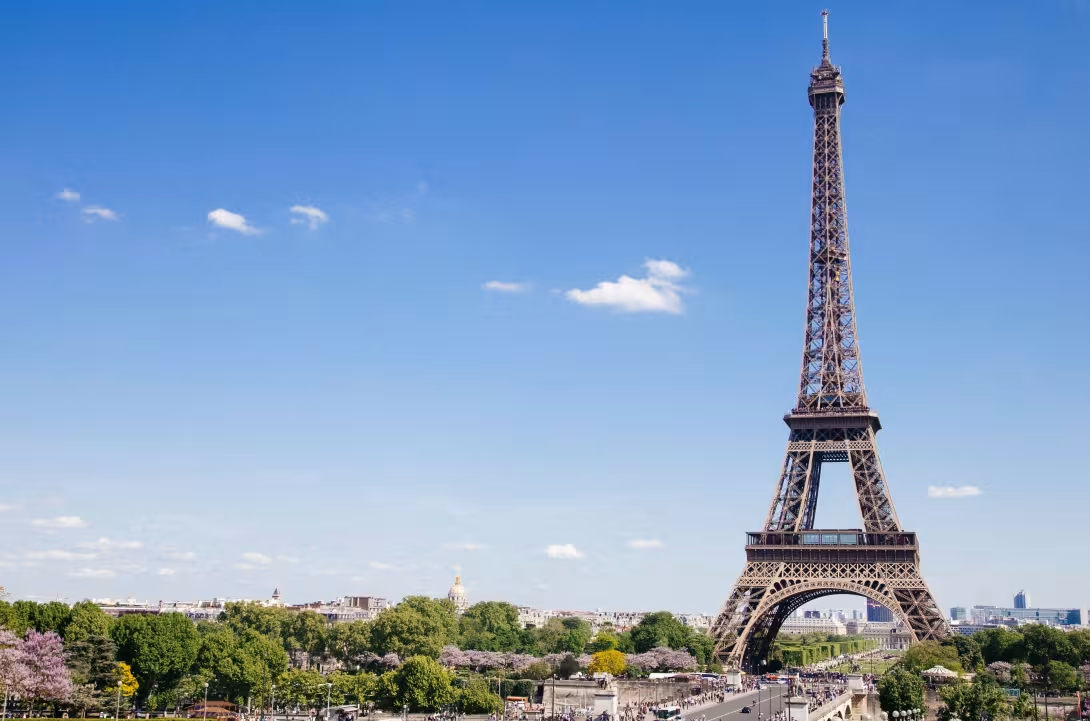
Photo by Anthony Delanoix on Unsplash
The World Bank and the city of Paris, France, are joining forces to support sustainable city efforts across the globe, especially cities and metropolitan regions in developing and emerging economies. In a Memorandum of Understanding (MOU) signed today, the World Bank and Paris agree to cooperate on sharing knowledge, tools, and good practices with other territories and cities.
“This is an exciting opportunity for cities around the world to learn from one of the leading cities in the world in urban design, public and green spaces, and climate smart resilient development,” said Sameh Wahba, World Bank Global Director for Urban, Disaster Risk Management, Resilience, and Land. “We are pleased to partner with Paris to bring that knowledge to a global level for all to benefit from.”
"The City of Paris is looking forward to this mutually rewarding association with the World Bank and the GPSC. Solidarity and international exchanges are a priority of this municipality, especially on themes related to environment preservation," said Emmanuel Grégoire, first Deputy Mayor of the City of Paris. "In this period of transition, a sharing community becomes essential and I am delighted to see that the World Bank is sharing its knowledge in such a concrete and generous way. This agreement marks the beginning of fruitful exchanges with our partners, which will provide important input to our staff and Parisians."
Under this MOU, Paris will become a Knowledge Partner under the Global Platform for Sustainable Cities (GPSC), which is supported by the Global Environment Facility (GEF), to work with the Bank in sharing knowledge and experience to support cities in the following areas:
- Climate change, urban environment, and sustainability issues;
- Inclusive cities including underprivileged groups and refugees;
- Urban management, urban design and public spaces, mobility and spatial development issues; and
- Disaster risk management and urban resilience.
Original post on the World BanK website.
Also published on Africa's Power Journal.