

Secondary cities and towns in the Sahel: Creating places of opportunity
19 SEPTEMBER 2025 /Blog
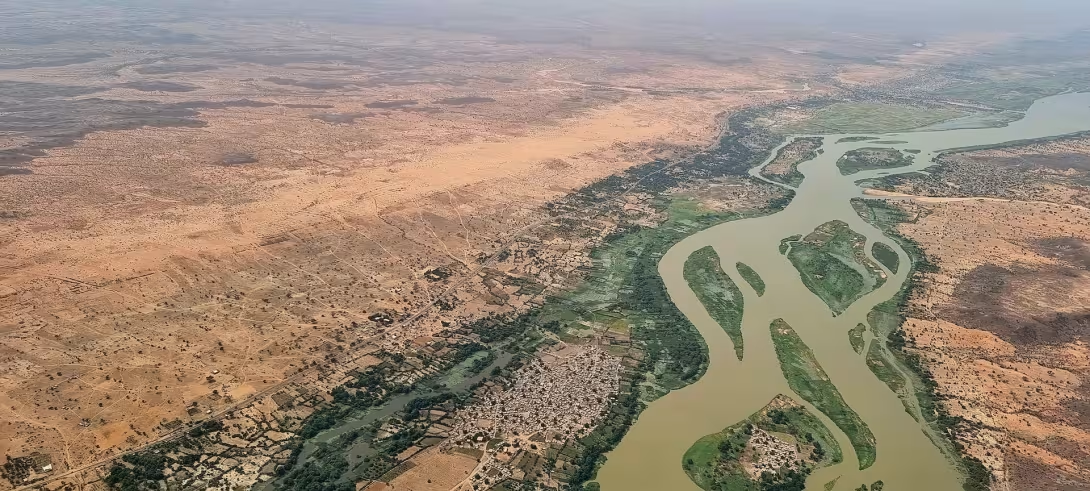
High levels of poverty coupled with conflict, instability, and climate-induced disasters, make the Sahel a difficult environment for the people that live there. Challenges from droughts and conflicts are on the rise threatening the livelihoods and food security of a large share of the population, particularly in rural areas. In search of refuge and opportunity, many are moving to cities, which are emerging as centers of resilience offering some glimmer of hope in this difficult environment. Close to five million refugees, asylum-seekers, refugee returnees, internally displaced people (IDP), and IDP returnees are estimated in the Sahel (2022 UNHCR). In Kaya, Burkina Faso, for example, a city of 120,000 (2019), the population has doubled in the previous two years due to an influx of IDP. The city is a securitized urban area, acting as a “last post/last bastion” between Ouagadougou and the conflict areas in the North, providing a safe haven for many.
The growth of cities and towns can bring opportunities through new livelihood opportunities and better access to services if well-planned and managed. At the same time, the rapid influx of population also presents challenges as cities cannot keep up with the strains on infrastructure and services. Many settle on unsuitable land which puts residents and businesses at risk of climate impacts and the integration of new residents may be threatening to some, creating heightened social risk. As one migrant in Sikasso put it, “At first, we were offered help. It gave us a real sense of relief. But, as you know, there’s a limit to aid. People did their best … but this couldn’t last forever.”
The study, Sahel, The Urban Link: Transforming Rural Economies and Addressing Fragility, analyzes the economic potential, fragility, and climate risk of cities/towns in Burkina Faso, Chad, Mali, and Niger, with a deeper look at three selected secondary cities - Kaya, Burkina Faso; Maradi, Niger; and Sikasso, Mali. The study points to the role these urban areas play as economic centers for the surrounding areas, particularly concerning markets and services, also providing opportunities for migrants. Analysis shows that the economic role of these cities is important and could be further developed as many have untapped potential. Border towns stand out across the region as having higher than average economic potential. To achieve this potential, urgent investments in secondary cities are needed. This includes resilient basic infrastructure and services, connectivity, transformative infrastructure, capacity for urban planning and management, and opportunities for microfinance and training that will foster job creation and social inclusion. When designing such interventions, the study points to a few guiding principles and lessons: Interventions should particularly focus on approaches that integrate and address the needs both of the urban area and the hinterland given the strong economic linkages; Sequencing investments can help ‘balance’ immediate urgent basic service delivery needs with long-term development.
Simple design is key for low-capacity cities, with opportunities for differing implementation modalities, particularly for fragile environments; Investing in local government capacity building is key to successful development and requires a long-term perspective for impact; Targeting opportunities for jobs and human capital improvements will help to increase economic opportunities over time, with particular attention needed for women and youth to address social exclusion; and Social inclusion of the forcibly displaced should take a ‘people in place’ approach which accounts for the needs of both existing and new communities to address vulnerabilities and mitigate social tensions. This messaging aligns closely with the recent Country Climate and Development Report: G5 Sahel, which points out opportunities to prevent risky urban growth and create climate-resilient cities, calling for policies to create a resilient urban development pathway over the next three years. While the region will continue to evolve and face many challenges, secondary cities can offer an opportunity for many in need. To help the cities reach their full economic potential and provide an environment of opportunity for residents, urgent priority action is needed.
Originally published here