

SDG 11 aims to make cities and communities inclusive, safe, resilient, and sustainable.
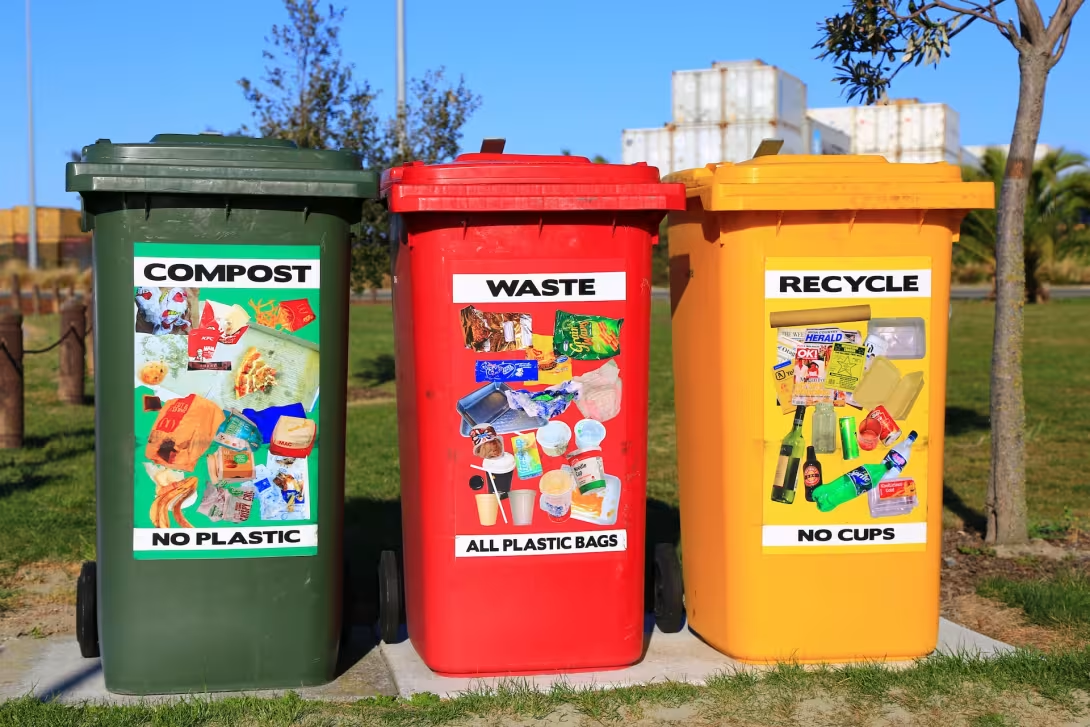
Cities today face the challenge of rising waste – particularly in the use of plastics – as populations grow and incomes rise. Uncollected or poorly managed waste leads to unhygienic conditions in communities and can severely impact people’s health. Managing waste is also important for the environment because it is a significant contributor to greenhouse gas emissions and can cause land and water pollution.

For cities to meet the SDG target 11.6 of avoiding adverse health and environmental impacts, waste must be collected and managed properly. In 2020, about 2.2 billion tonnes of waste was produced across the world – equivalent to 376 kg of waste per capita or six times the weight of an average person.
As shown in this chart of the 2023 Atlas of Sustainable Development Goals, the expected increases in population, income and urbanization mean waste will continue to grow, at a pace estimated to be almost triple that of population growth. Global population is expected to rise 25 percent from 7.5 billion in 2020 to about 9 billion people in 2050. Meanwhile, waste is expected to grow from 2.2 billion tonnes in 2020 to 2.8 billion tonnes by 2030 and to 3.9 billion tonnes by 2050 – a total increase of 73 percent.
The growth in waste has historically come from upper-middle-income and high-income countries. But now, waste generation in high-income countries is no longer accelerating. In the next 30 years, the fastest growth in waste generation is estimated to come from middle income countries.
To learn more about the future of waste and how it is managed, look at the data stories and visualizations of the eleventh story of the Atlas.