


Reimagining Mongolia’s Ger Districts: A Blueprint for Green, Resilient and Affordable Housing
March 03, 2026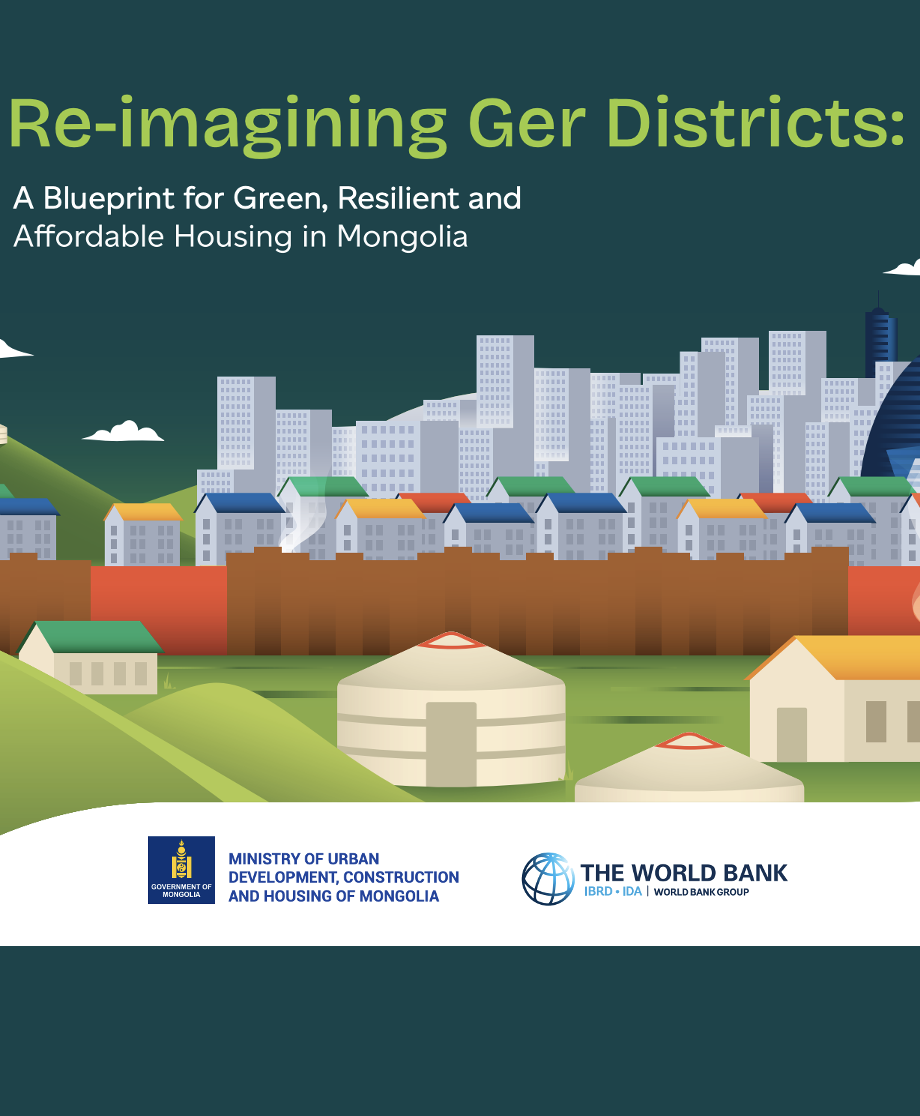
Mongolia’s urban landscape stands at a crossroads of tradition and modernization. In the absence of comprehensive planning measures and development strategies, rapid urbanization has strained infrastructure, highlighted the acute need for adequate housing, and driven up pollution and climate hazards. These challenges are especially acute in the ger areas, a fixture of Mongolia’s urban landscape. This study, conducted through fieldwork from 2022 to 2024, under the oversight of the Ministry of Urban Development, Construction and Housing, and with close collaboration with the municipal governments of Darkhan and Erdenet, identifies solutions to address these challenges.
Ger areas embody Mongolia’s transition from historically nomadic lifestyles to contemporary semi-urban settlements, characterized by a combination of traditional Mongolian yurts (gers) and increasingly, simple brick or wooden houses. About 60% of Mongolia’s urban population live in ger areas today (ADB, 2020). Their rapid growth is the result of increased rural-to-urban migration, land privatization, and legislation entitling all Mongolian citizens to ownership of land parcels. While these allocation policies have led to high ownership rates, they have also spawned a network of interconnected urban challenges, including the underutilization of urban land, heightened pollution levels, increased vulnerability to natural disasters, growing housing deficits, and the emergence of sprawling low-density neighborhoods. Due to the unplanned nature of these neighborhoods, many still lack access to basic infrastructure – less than 50% of the population of Ulaanbaatar has access to central heating, clean water, and sewerage (World Bank, 2022).