

GPSC Compendium: Strategy and Innovation for Bus Reforms in Developing Countries
16 MARCH 2017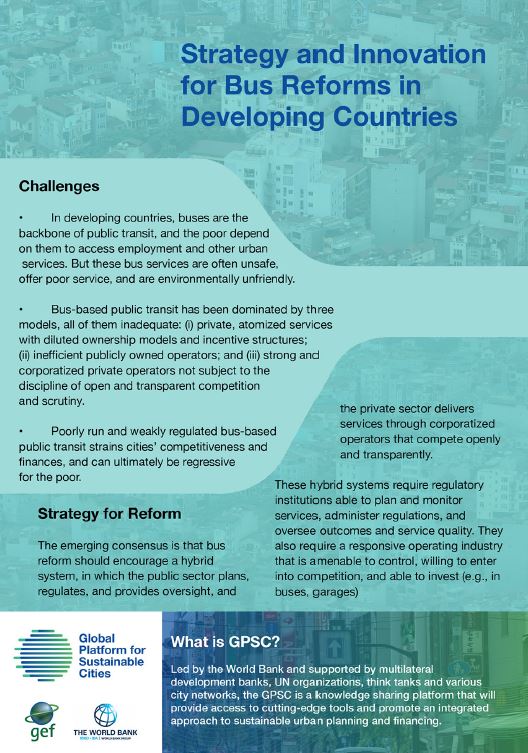
In developing countries, buses are the backbone of public transit, and the poor depend on them to access employment and other urban services. But these bus services are often unsafe, offer poor service, and are environmentally unfriendly. Bus-based public transit has been dominated by three inadequate models, and poorly run and weakly regulated bus-based public transit strains cities competitiveness and finance. The emerging consensus is that bus reform should encourage a hybrid system, in which the public sector plans, regulates and provides oversight, and the private sector delivers services through corporatized operators that compete openly and transparently.