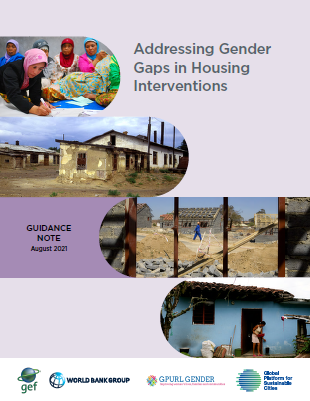
With more than half of the world’s population living in cities, ongoing urbanization presents both significant opportunities and complex challenges that will shape the global environment. Ensuring that cities grow in a way that is both sustainable and inclusive is critical, particularly in sectors such as housing where inequalities are deeply embedded. This Guidance Note supports World Bank teams, as well as city and national governments, in understanding and addressing the gendered impacts of housing interventions, emphasizing that equitable access and benefits for all—regardless of gender or identity—are essential for effective outcomes. It highlights key gender gaps across areas such as access to affordable housing, tenure security, housing finance, and home improvements, as well as broader constraints related to legal and socio-cultural norms, construction markets, and urban planning and service access, providing a framework to design more inclusive and impactful housing policies.