

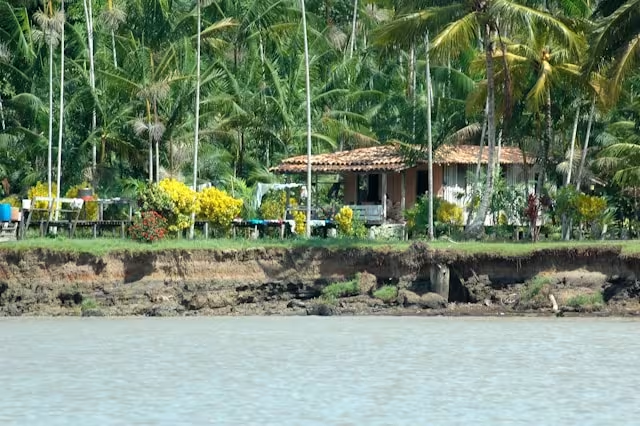
Belém, the capital of Pará State and gateway to the Brazilian Amazon, participates in the GEF-7 UrbanShift program implemented by UNEP and executed by the Ministry of Science, Technology, and Innovation through the CITinova II project. As one of the country’s main economic hubs in the Amazon region, Belém faces mounting pressures from rapid urbanization, deforestation, and inadequate infrastructure planning. The city’s expansion, driven by mining, energy, and agriculture, has led to environmental degradation and loss of rainforest ecosystems that are critical for local and global climate stability. Through UrbanShift, Belém is co-developing low-emission mobility and land-use solutions, including pilots along Almirante Barroso Avenue and a “Low-Emission Belém City Center” strategy. The program also promotes sustainable agroforestry practices on Combú Island, supporting community livelihoods and demonstrating how integrated, low-carbon planning can enhance resilience in Amazonian urban regions.