

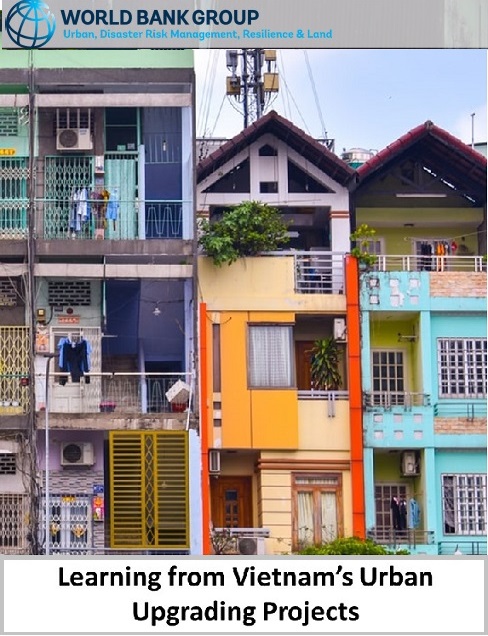
When economic and political reforms were introduced in Viet Nam to transition from a centralized economy to a socialist-oriented market economy in 1986, urbanization started to accelerate. The central government responded to the influx with an inclusive approach to urban development. Three World Bank-financed projects have played a major part in this: the Viet Nam Urban Upgrading Project (VUUP, 2004-2014), the Mekong Delta Urban Upgrading Project (MDR UUP, 2012-2018), and the ongoing Scaling up Urban Upgrading Project (SUUP).
The projects incorporated the best global practices of the times and evolved by learning from each phase of implementation. The VUUP shifted away from the conventional practice of slum clearance and resettlement to focus instead on maximizing infrastructure coverage with in situ upgrading to stretch out investment dollars and reach the greatest number of beneficiaries. As the project progressed, key lessons were learned as well.