

A model for Transit Oriented Development: Curitiba, Brazil

29 FEBRUARY 2016

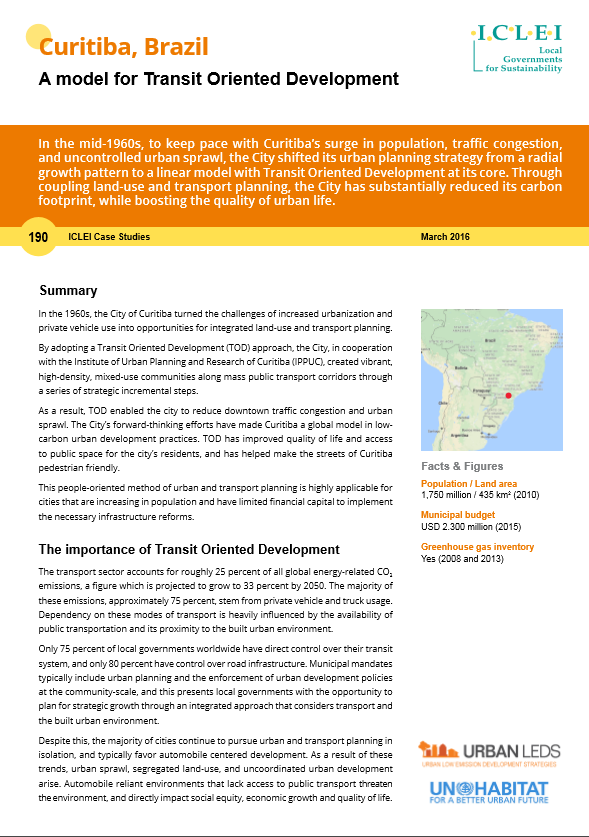
In the mid-1960s, to keep pace with Curitiba’s surge in population, traffic congestion, and uncontrolled urban sprawl, the City shifted its urban planning strategy from a radial growth pattern to a linear model with Transit Oriented Development at its core. This study depicts how TOD enabled Curitiba to reduce downtown traffic congestion and urban sprawl, and improve quality of life and access to public space for the residents. The City’s forward-thinking efforts have made Curitiba a global model in low carbon urban development practices. This people-oriented method of urban and transport planning is highly applicable for cities that are increasing in population and have limited financial capital to implement the necessary infrastructure reforms. 
Related Content
View all

Mobility

TOD Implementation Resources and Tools

Transit-oriented development, commonly known as TOD, is a planning and design strategy that focuses on creating urban development patterns which facilitate the use of public transit,walking and
Knowledge Product

Learn more

Mobility

Creating a world class culture of ecomobility: the case of Kaohsiung City

This case study showcases that how cities through concerted efforts can make a shift toward an ecomobile culture within their jurisdiction. Kaohsiung is committed to developing a world class culture
Knowledge Product

Learn more

Mobility

Sustainable and Safe: A Vision and Guidance for Zero Road Deaths

The “Safe System” approach requires a shift in responsibility from the people using roads to the people designing them. It is a systemic approach that integrates core management elements and action
Knowledge Product

Learn more