

Violence Against Women and Girls: Transport Sector Brief
October 13, 2015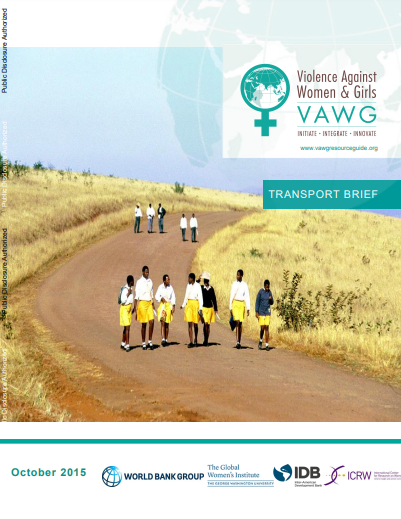
Transport infrastructure and services development has historically been largely gender-blind, in other words, it has not taken gender roles and men’s and women’s different uses of transport into account. We know, though, that women and men’s differing roles determine their travel decisions and transportation needs. The lack of sex-disaggregated data for transport planning makes it difficult to create gender-responsive transport systems—those that take into account women’s and men’s differing needs. Mobility patterns are different for women and men. Women’s travel patterns are more complex and heterogeneous than men’s. Because of the strong persistence of the economy of care in low and middle income countries, many women need to make trips that are shorter in both time and distance, be more willing to combine trips, make more household-serving trips, and travel with children and with more packages than men do.